Flame Resistant Western Work Shirts That Earn Trust
August 23, 2026 · isaac Bounds
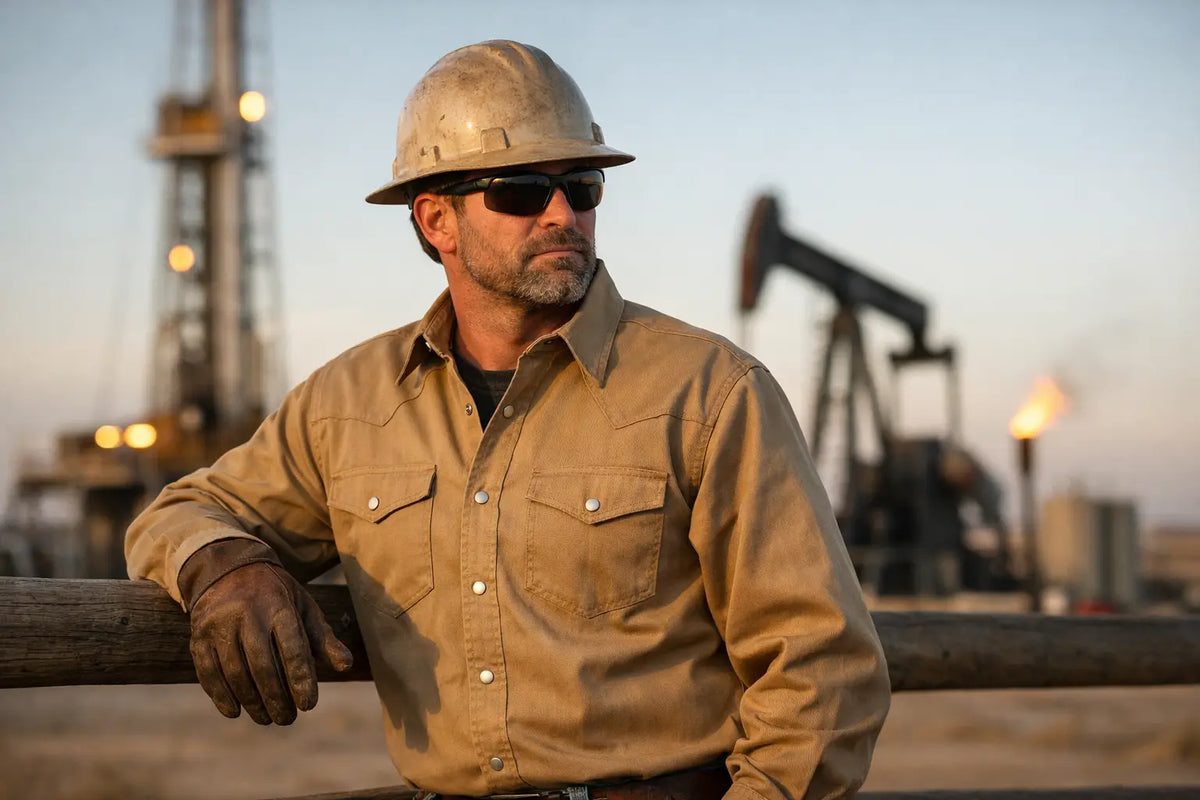
A work shirt has to do more than look right when the day carries real risk. Flame resistant western work shirts give men who work around flash-fire and arc-flash hazards a familiar, hard-working silhouette with protection built into the garment. The snap front, pointed yokes, and western pockets are not a costume. They are part of a practical shirt designed for men who expect their clothing to show up, hold its shape, and perform without losing its edge.
The right choice comes down to more than color and size. Protection standards, fiber construction, job requirements, fit, and care all matter. Dress like you mean it, but make sure the shirt behind the look is ready for the conditions in front of you.
What Flame Resistance Actually Means
Flame-resistant apparel is made to resist ignition, avoid melting or dripping, and self-extinguish once the ignition source is removed. That distinction matters. A standard cotton western shirt may feel durable, but it is not automatically flame resistant. A synthetic shirt can create an even greater hazard if it melts under extreme heat.
Flame resistance may be inherent to the fiber itself, or it may come from a treatment applied to the fabric. Inherently flame-resistant fabrics are engineered with protective properties that remain for the usable life of the garment. Treated fabrics can also provide reliable protection, but they must be washed and cared for according to the manufacturer's instructions to maintain performance.
No shirt makes a hazardous task safe on its own. Flame-resistant clothing is one layer in a broader safety system that includes proper work practices, site rules, and the personal protective equipment required for the job. Always follow your employer's safety program and the hazard rating specified for your work area.
Start With the Rating Your Job Requires
Before focusing on fabric weight or western styling, check the label. The shirt should clearly identify its flame-resistant designation and the standards it meets when applicable. Depending on the industry and jobsite, that may include standards associated with flash-fire exposure, electrical arc hazards, or both.
The key is matching the garment to the hazard. Oilfield, utility, welding, electrical, and industrial work can each carry different exposure risks. A shirt that works for one setting may not meet the required arc rating or protective category for another. If your employer specifies an ATPV, EBT, HRC, CAT level, or a particular compliance standard, treat that requirement as the starting line, not fine print.
Do not assume that a heavier shirt automatically offers better protection. Fabric weight can affect durability and warmth, but the garment's labeled rating is what tells you how it performed in the required testing. Buy based on verified labeling, then choose the weight and fabric blend that makes sense for your shift and climate.
Understand the trade-off between weight and mobility
Heavier flame-resistant shirts usually feel more substantial and can stand up well to abrasion, wind, and cooler weather. They also tend to layer cleanly under a jacket. The trade-off is heat. If you work outdoors in high temperatures or move constantly, a lighter, breathable FR fabric may help you stay more comfortable and focused.
Comfort is not a luxury on a long shift. A shirt that binds through the shoulders, overheats you by noon, or rides up when you reach will spend more time in the truck than on your back. The best workwear earns its place because you can move in it all day.
Why the Western Cut Still Works
Western work shirts were built around movement long before workwear became a style category. The snap closure is fast and functional, especially with gloves. Pointed front and back yokes reinforce the western profile while giving the shirt a clean structure. Chest pockets keep small essentials close without turning the garment into a bulky utility vest.
There is also a practical reason the look remains popular across ranch, field, shop, and industrial work. It carries a straight, capable presence. A well-cut western shirt looks right with work boots and denim, but it does not need to stay on the jobsite. In a dark indigo, charcoal, tan, or subtle plaid, it can move from an early start to a casual evening without asking you to change your whole outfit.
That versatility should never come at the expense of compliance. If flame resistance is required, choose a legitimately rated FR western shirt rather than a conventional western shirt that only resembles one. The details should support the job, not imitate it.
How Flame Resistant Western Work Shirts Should Fit
A proper fit gives you room to work without leaving excessive fabric exposed to snagging hazards. Start with the shoulders. The shoulder seam should sit near the edge of your natural shoulder, allowing easy reach across your body and overhead. If the seam pulls high or the back feels tight when you extend your arms, size up or look for a cut with more mobility through the upper body.
The chest should have enough room to button comfortably over your usual base layer. It should not strain across the pockets or pull open at the snaps. Through the torso, avoid an overly tailored fit. Work shirts need space for bending, climbing, and layering, especially when temperatures drop.
Sleeve length deserves close attention. Cuffs should reach the wrist without climbing up your forearm when you move. For taller men, standard sleeve and body lengths often come up short exactly where coverage matters. Tall sizing is worth seeking out when you need added length through the torso and arms instead of simply adding unwanted width through the chest.
Build the rest of the outfit with purpose
For most workdays, pair an FR western shirt with job-appropriate FR pants, dependable boots, and any required outer layers. Keep non-FR items from becoming the weak point in a required protective system. If you need a base layer, use one that meets the relevant workplace requirements rather than reaching automatically for a standard synthetic performance tee.
Off the clock, the western shirt can carry the outfit on its own. Wear it with dark denim, clean boots, and a restrained belt. The point is not to over-style a work shirt. Let the structure, fabric, and fit do the work. Confidence reads better than clutter.
Care Protects the Garment's Performance
Flame-resistant workwear needs disciplined care. Follow the garment label first, because fiber blends and treatments can have specific requirements. In general, wash FR clothing separately from garments contaminated with flammable substances, and do not use chlorine bleach or fabric softeners unless the manufacturer explicitly allows them.
Avoid home remedies and guesswork. Fabric softeners, starches, bug sprays, oils, grease, and certain contaminants can affect how a garment performs or create fuel on the surface. If a shirt becomes heavily contaminated with flammable material, remove it from service until it has been properly cleaned or replaced according to workplace policy.
Inspect the shirt before wearing it. Look for torn cuffs, damaged seams, failed snaps, holes, and areas worn thin by abrasion. Normal fading does not necessarily mean the shirt has lost its protective qualities, but visible damage can compromise coverage. Repair or replace garments based on the manufacturer's guidance and the standards of your employer.
Choose a Shirt That Matches Your Standard
The best flame resistant western work shirts balance verified protection with a fit you can rely on. Look for clear labeling, honest fabric details, durable construction, and sizing that respects how working men are built. A sharp western profile is a bonus, but it is a meaningful one: when your gear fits well and looks intentional, you carry yourself differently.
Your work asks for consistency. Your shirt should reflect it - dependable in the heat, comfortable through the motion, and built with enough presence to look right long after the shift ends.