How to Layer Men's Jackets Without the Bulk
August 30, 2026 · Admin
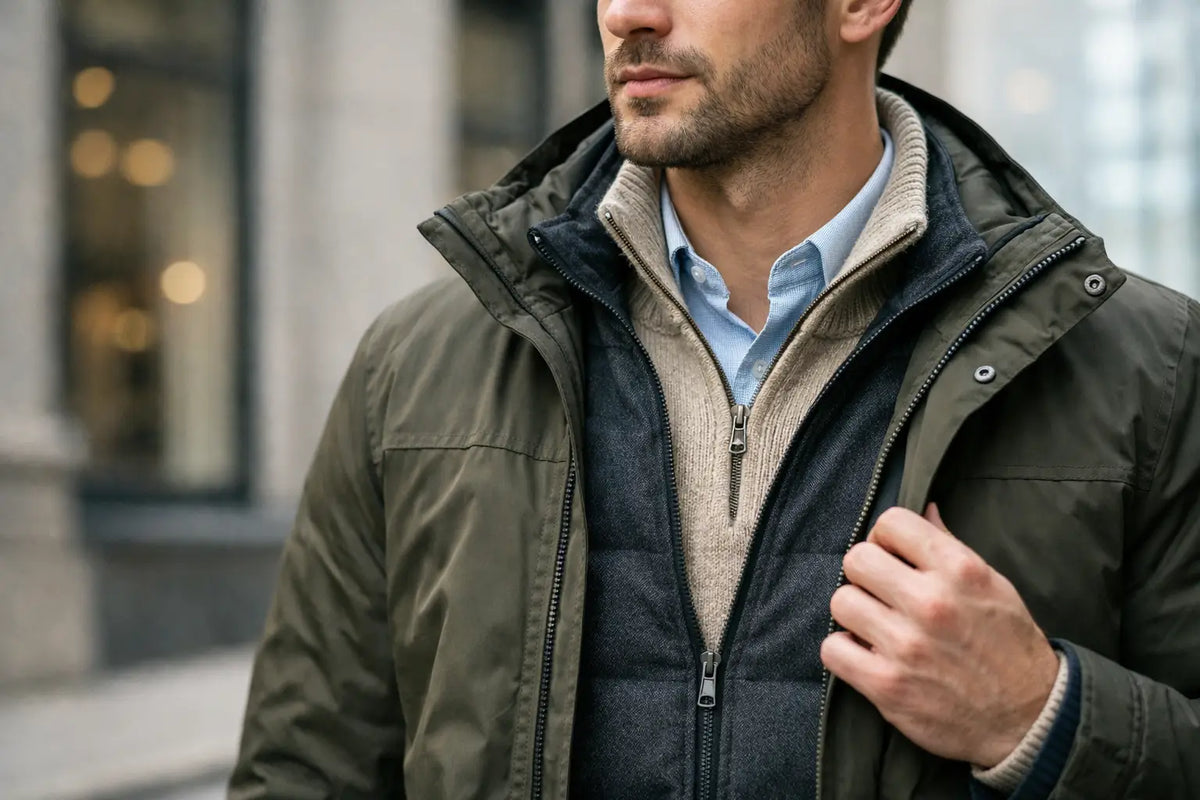
A good jacket does more than keep out the cold. It gives the rest of your outfit structure. Knowing how to layer men's jackets means using that structure with purpose, whether you are heading to the office before sunrise, working outside, or meeting friends after dark. The goal is not to wear as many pieces as possible. It is to build warmth, range of motion, and a clean silhouette without looking overstuffed.
The strongest layered outfits follow one rule: every layer needs a job. Your base manages comfort, your middle layer provides insulation or texture, and your outer jacket handles weather and visual impact. Get those roles right and even practical cold-weather clothing looks considered.
Start With the Right Layering Order
Layer from lightest and closest-fitting to heaviest and most protective. A fitted T-shirt, henley, or long-sleeve crewneck belongs closest to the body. From there, add an overshirt, flannel, hoodie, cardigan, or lightweight quilted piece. Finish with the jacket built for the conditions.
This order matters because bulky fabric trapped under a slim jacket restricts movement and creates bunching at the shoulders and arms. It also matters visually. The closer layers should sit cleanly, while the outer layer should have enough room to cover them without pulling across the chest.
Think of a jacket as either a middle layer or an outer layer, not automatically both. A denim trucker jacket works well over a tee and under a roomy parka or waxed field coat. A heavyweight puffer is usually the final layer. Trying to put another jacket over it rarely improves the outfit or the warmth.
Match the Jacket to the Weather, Not the Calendar
Men often make layering harder by dressing for the season instead of the actual forecast. A crisp 55-degree morning calls for a different system than a wet 38-degree afternoon, even if both happen in fall.
For mild weather, use a light jacket as the main layer: a bomber, Harrington, denim jacket, chore coat, or unlined field jacket. Under it, a T-shirt or button-front shirt is usually enough. If the temperature will drop later, add a thin merino sweater or a substantial overshirt rather than jumping straight to a heavy coat.
For cold, dry weather, build insulation through the middle. A thermal or long-sleeve tee, a flannel or hoodie, and a wool coat, puffer, or insulated work jacket give you adjustable warmth. In wet or windy conditions, prioritize the shell. A water-resistant jacket with room for a fleece or quilted liner will serve you better than stacking stylish but unprotected layers.
There is a trade-off. Heavy cotton flannel and denim look rugged, but they can feel cold and slow to dry in rain. Technical fleece and insulated shells perform better outdoors, though they can look too casual for a business setting. Choose the system that fits where you will actually spend the day.
Keep the Inner Layers Trim
The difference between layered and bulky is fit. Your base layer should follow the body without clinging. Your midlayer needs enough ease to move, but it should not hang lower than every jacket above it or balloon at the waist.
Pay close attention to the armholes, shoulders, and collar. If your shirt sleeves twist under a hoodie, or the hoodie bunches under a jacket, the pieces are fighting each other. Size up only when the outer jacket is clearly cut as a slim style and you intend to wear substantial layers beneath it. Otherwise, buying a larger jacket can leave you with drooping shoulders and oversized sleeves when you wear it on its own.
Length is another quiet detail that makes an outfit look deliberate. A T-shirt can sit slightly below an overshirt or trucker jacket in casual settings. For sharper outfits, keep the hemline clean: shirt, sweater, and jacket should end in a controlled progression. A long blazer-style coat can cover a shorter jacket, but a cropped bomber over a long, bulky sweatshirt usually looks accidental.
Build Around One Statement Jacket
When you layer two jacket-like pieces, let one lead. A waxed canvas field jacket, leather jacket, wool topcoat, or bold workwear chore coat has enough presence to anchor the outfit. Keep the layer beneath it simpler in color and texture.
For example, a charcoal hoodie under an olive field jacket creates a practical, grounded combination. The hoodie supplies warmth and a relaxed edge; the field jacket brings shape and weather protection. Pair it with dark denim or straight-leg utility pants and sturdy boots. Nothing has to compete.
A denim jacket beneath a wool overcoat is another reliable combination when the temperatures drop. Keep the denim jacket fitted, choose a neutral wash, and use a thin knit or button-front shirt underneath. The coat should be long enough and roomy enough to fall cleanly over the trucker jacket. This pairing works because the denim adds texture while the wool coat keeps the overall look refined.
A leather jacket deserves restraint. Wear it over a fine-gauge sweater, henley, or heavyweight tee, not a thick hoodie unless the leather is cut generously. Leather is naturally structured, and too much bulk beneath it can make the chest and shoulders look stiff.
Use Texture and Color With Restraint
Layering gives you a chance to combine fabrics, but not every piece needs to announce itself. Start with a controlled foundation such as black, charcoal, navy, olive, brown, cream, or faded blue. Then add contrast through texture: brushed flannel under smooth nylon, denim under wool, or a soft knit beneath rugged canvas.
The most dependable approach is to keep two layers neutral and let one carry the color. A navy overshirt, gray tee, and tan work jacket feel balanced. So does a black puffer over a heather-gray hoodie and dark jeans. If you choose a graphic sweatshirt or a patterned flannel, keep the jacket clean and understated.
Avoid stacking similar weights and similar finishes without contrast. A shiny puffer over a shiny polyester track jacket can look overly technical unless you are dressing specifically for training or outdoor activity. Two heavy plaid layers can feel busy. One visual focal point is enough.
Layer Men's Jackets for Work and Weekends
The best outfit is the one that performs through your full day. For a jobsite, ranch, warehouse, or outdoor work, start with function. A moisture-managing tee or henley, durable work shirt, and insulated canvas or water-resistant work jacket gives you protection without sacrificing movement. Flame-resistant workwear should only be layered according to its safety requirements. Do not assume that adding any ordinary jacket over protective clothing preserves its rated performance.
For a business-casual commute, use cleaner lines. A lightweight merino sweater or oxford shirt under a structured overshirt can sit comfortably beneath a topcoat. Stick to dark denim or tailored trousers, leather boots, or minimal sneakers. You will stay warm without bringing a weekend hoodie into a more polished environment.
For off-duty wear, a hooded sweatshirt under a trucker, bomber, or field jacket remains hard to beat. Choose a hoodie with a trim body and a hood that lies flat. Let the jacket stay open unless the weather demands otherwise. This keeps the layers visible and prevents the outfit from feeling compressed around the neck.
Test Movement Before You Leave
A layered outfit can look right in the mirror and fail the moment you drive, carry a bag, or reach overhead. Before heading out, sit down, raise both arms, zip the jacket, and put your hands in your pockets. If the jacket rides high at the waist, pulls sharply across the back, or makes your collar feel crowded, change one layer.
This is where quality construction earns its place. Strong shoulder seams, durable zippers, lined sleeves, and fabric with enough give make a real difference over long days. A well-chosen jacket should support the way you move, not ask you to work around it.
The Finishing Details Matter
Your footwear and accessories should support the weight of the layers. Heavy canvas, denim, and insulated jackets pair naturally with work boots, service boots, or substantial sneakers. A wool topcoat and fine knit call for cleaner leather footwear. A simple beanie, leather gloves, or a watch can finish the outfit, but keep accessories practical and measured.
Fragrance deserves the same restraint. Colder weather allows richer woods, amber, spice, and leather notes to carry well, but a few sprays are enough when you are wearing multiple layers. Your jacket should leave an impression before your scent arrives.
Dress for the conditions, but do not surrender your standards to them. The right layers should make you feel prepared the moment you step outside: warm enough to move, sharp enough to be seen, and comfortable enough to keep going.