How to Wash Raw Denim Without Ruining It
August 27, 2026 · Admin
Raw denim is built to tell the truth about how you live in it. The creases at the knee, the fading at the pockets, and the softening through the seat are earned details, not defects. Knowing how to wash raw denim gives you control over that process, so your jeans develop character without losing their shape, color, or integrity.
There is no single wash schedule that works for every pair. Fabric weight, dye method, climate, workday demands, and how hard you wear your jeans all matter. The goal is not to preserve raw denim in museum condition. It is to care for it with intention.
What Makes Raw Denim Different?
Raw denim, sometimes called dry denim, has not been washed after dyeing and production. It typically arrives dark, crisp, and richly saturated with indigo. Unlike pre-washed jeans, it has not been softened, faded, or distressed at the factory.
That extra indigo is what creates the appeal. As you move, bend, sit, and carry your everyday essentials, the dye gradually wears away in high-contact areas. Over time, your jeans become distinctively yours.
Raw denim is not always selvedge denim, and selvedge denim is not always raw. Selvedge refers to the finished edge created on a narrow shuttle loom, while raw refers to the absence of a post-production wash. Many premium pairs are both, but the care approach is centered on whether the denim is raw.
When Should You Wash Raw Denim?
The old advice is to wait six months before the first wash. That can work if you wear the same pair frequently, keep them reasonably clean, and want high-contrast fades. It is not a rule you need to follow at the expense of comfort or hygiene.
Wash your jeans when they are visibly dirty, smell stale, feel grimy, or have been exposed to sweat, food, mud, or workplace contaminants. For a man who wears his denim a few times a week in an office or casual setting, the first wash may come after several months. For workwear, travel, hot weather, or daily wear, it may come much sooner.
Waiting longer generally preserves more dark indigo and produces sharper fading. Washing earlier creates a more even, naturally softened appearance. Neither result is wrong. Choose the outcome that fits how you actually wear your clothes.
One exception is unsanforized raw denim. This fabric has not been pre-shrunk, so its first soak or wash can cause significant shrinkage. If your jeans are unsanforized, follow the maker's sizing guidance before wearing them heavily. A deliberate initial soak may be part of getting the fit right.
How to Wash Raw Denim by Hand
Hand-washing is the safest choice when you want to minimize color loss, reduce abrasion, and keep the fit as stable as possible. It is especially useful for heavyweight denim, dark indigo pairs, and jeans you have spent months breaking in.
Start With Cold Water
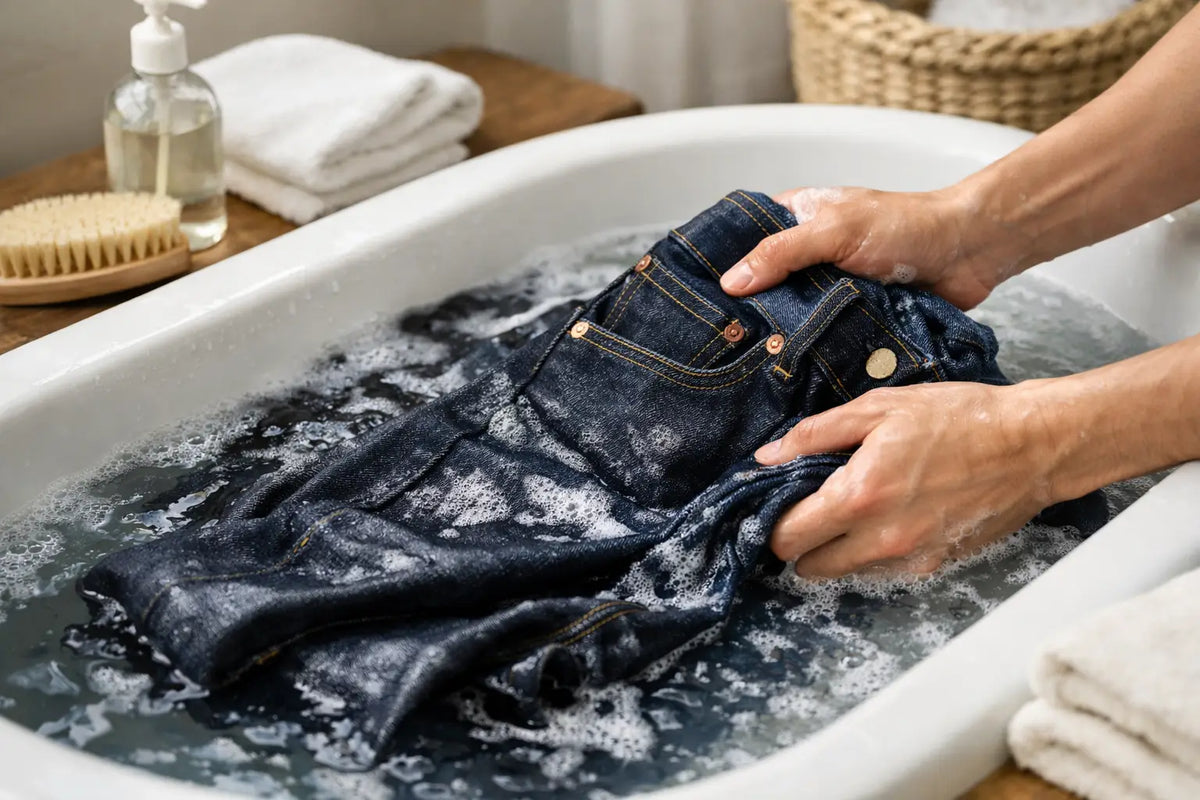
Fill a clean tub, basin, or large sink with cold water. Cold water helps limit indigo bleeding and reduces the chance of unwanted shrinkage. Turn your jeans inside out before they touch the water. This protects the outer surface from friction and helps preserve the face of the fabric.
Add a small amount of mild liquid detergent made for dark clothing or delicate fabrics. Use less than you think you need. Too much detergent is difficult to rinse out and can leave stiff residue in the denim. Avoid bleach, fabric softener, whitening agents, and harsh stain treatments unless the care label specifically permits them.
Soak, Then Move Them Gently
Submerge the jeans and let them soak for about 30 to 45 minutes. Press the fabric beneath the water and gently move it around with your hands. Do not twist, scrub aggressively, or wring the denim. Raw denim is durable, but rough handling can create uneven wear before the fabric has had a chance to break in naturally.
For a small spot, treat only the affected area first with a tiny amount of mild detergent and cold water. A soft cloth or soft-bristle brush can help, but use a light touch. Hard scrubbing may leave a faded patch that looks more accidental than earned.
Rinse Until the Water Runs Clear
Drain the soapy water and refill with cold, clean water. Rinse the jeans until there is no detergent left in the fabric. Some indigo release is normal, particularly during the first few washes. Keep raw denim separate from light towels, shirts, or anything else you do not want tinted blue.
Lift the jeans out carefully and press out excess water. Do not wring them. Lay them flat on a clean towel, roll the towel and jeans together, and press to remove more moisture before drying.
How to Wash Raw Denim in a Machine
A washing machine is a practical option for most raw denim, provided the care label allows it. The key is lowering the forces that fade, shrink, and stress the fabric: heat, agitation, and unnecessary detergent.
Turn the jeans inside out, button or zip them closed, and wash them alone or with other dark denim. Select cold water and the gentlest cycle available. Use a small amount of mild detergent, then skip the fabric softener. Fabric softener can coat the fibers and interfere with denim's natural texture over time.
Do not overload the machine. Jeans need room to move without being rubbed harshly against other garments. If your machine has an extra-rinse setting, it can be useful, especially with heavyweight denim that holds detergent deep in the weave.
Machine washing will usually produce more uniform fading than hand-washing. For many men, that is a worthwhile trade-off for convenience. Good denim is meant to be worn, not managed like a fragile collectible.
Dry Raw Denim the Right Way
Heat is the fastest way to shrink raw denim, especially cotton-heavy jeans. Unless you are intentionally trying to reduce the size of a loose pair, skip the dryer.
Reshape the jeans while they are damp. Smooth the legs, straighten the seams, and gently pull the waistband and inseam into their intended proportions. Then hang them by the waistband or lay them flat in a well-ventilated area away from direct sunlight. Strong sun can fade indigo unevenly and leave the fabric feeling dry.
Expect raw denim to feel stiff after washing. That is normal. The fabric will soften again as you wear it. If you want to tighten the fit slightly, a brief low-heat tumble can work, but use that approach carefully. Heat is difficult to reverse once the cotton has shrunk.
Between Washes: Keep Your Denim Fresh Without Overdoing It
Hang your jeans after each wear rather than leaving them in a pile or packed into a gym bag. Airflow does more for freshness than most quick fixes. If they need a light refresh, turn them inside out and hang them in a shaded, breezy area for a few hours.
Freezing jeans is a popular raw-denim ritual, but it does not truly clean them or remove oils and soil from the fabric. It may reduce odor temporarily, but it is not a replacement for washing. A clean pair of jeans should still look lived-in. There is a difference between authentic wear and neglect.
Be mindful of indigo transfer during the early months. Dark raw denim can rub onto white sneakers, light upholstery, leather seats, and pale shirts. This settles down with wear and washing, but caution is smart while the dye is still heavy.
Common Raw Denim Care Mistakes
The biggest mistake is treating every wash as a disaster. Denim is a workwear fabric at its core. It can handle a proper wash when it needs one. What damages it is repeated hot washing, high-heat drying, heavy detergent use, and excessive abrasion.
Another mistake is buying raw denim too tight with the assumption it will stretch indefinitely. Most raw denim relaxes in the waist and seat with wear, but it does not become a different size. Start with a fit that is close, secure, and comfortable enough to move in. Care should support a strong fit, not rescue a poor one.
Finally, do not confuse stiffness with quality. A rigid new pair can feel substantial, but great denim should become more comfortable as it adapts to you. Let that process happen through real wear, proper washing, and patience.
Raw denim rewards consistency. Wear it hard, wash it when it calls for it, and let the fabric carry the record of the life you put into it. That is not wear and tear. That is a standard built over time.