Low-Rise vs. Mid-Rise Jeans for Cowboy Boots: Men’s Fit Guide
September 20, 2026 · Isaac Bounds
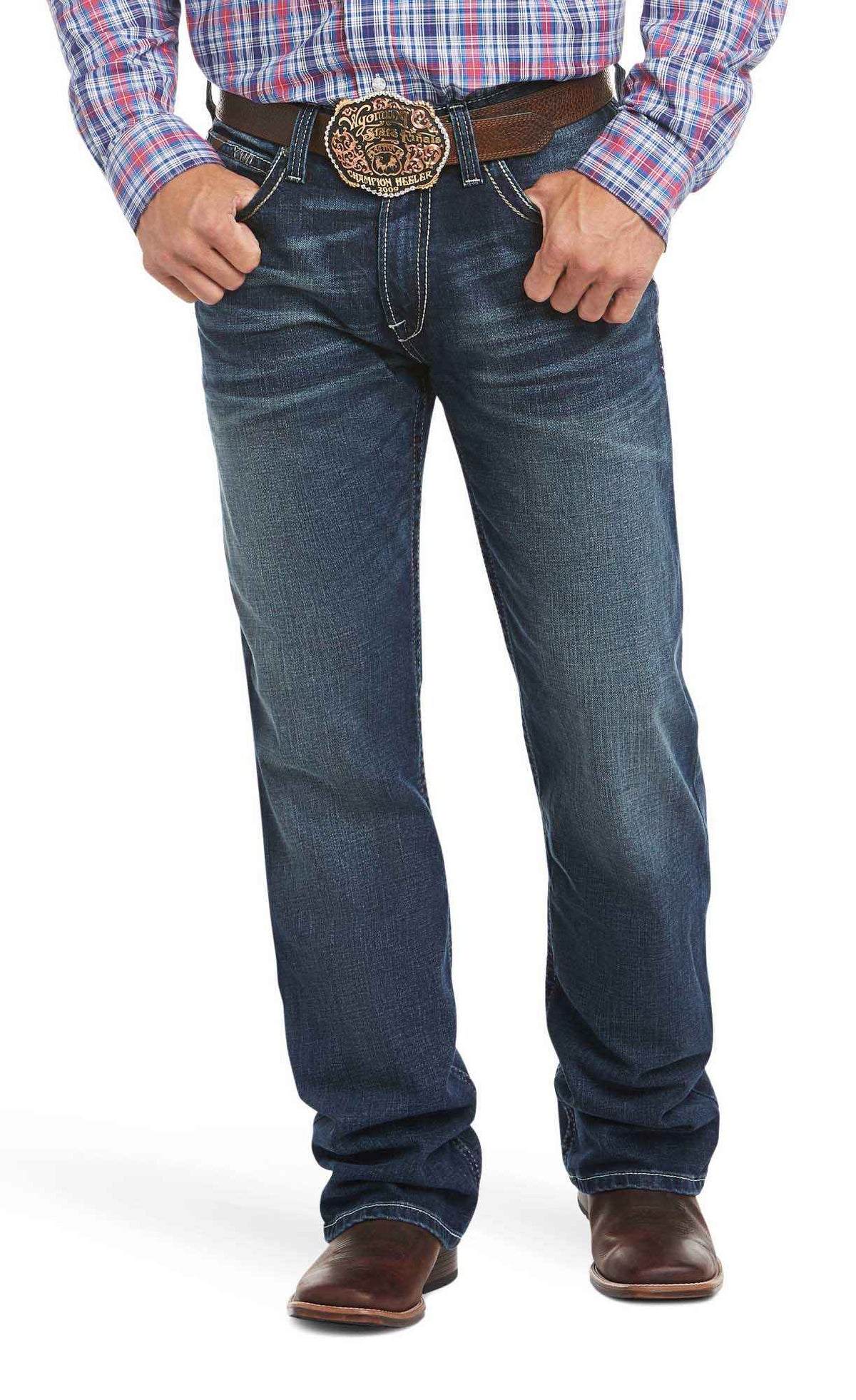
When men shop for Western denim, most of the attention goes to bootcut versus straight leg, slim versus relaxed, or how much the jeans should stack over a pair of boots. Rise is easier to overlook, but it changes where the waistband and belt line sit, how a tucked shirt looks, and how the upper half of the jeans feels when you sit, bend, or move.
That makes low-rise vs. mid-rise jeans for cowboy boots a useful comparison of its own. Rise does not determine whether denim will clear a cowboy-boot shaft—that job belongs mostly to the lower-leg cut, leg opening, and inseam—but it does affect the proportions and comfort of the outfit above the knee.
Quick answer: low-rise jeans sit lower on the waist and can create a more relaxed, modern belt line. Mid-rise jeans sit higher and are often the easier all-around choice for men who tuck in Western shirts, want more coverage when sitting, or prefer the waistband closer to the natural midsection. Neither rise is automatically better with cowboy boots. Choose the rise for your body and shirt proportions, then confirm the leg cut works over the boots.
If your main question is how the denim should fall around the boot itself, start with Veloura’s guide to how men’s jeans should fit over cowboy boots. This article focuses specifically on the waist position and upper-jean fit that guide only touches briefly.
What Does Jean Rise Mean?
Jean rise describes the distance from the crotch seam up to the waistband. In everyday terms, it determines where the jeans sit on your torso.
- Low-rise jeans sit lower on the waist. The belt line lands farther below the natural waist, which can give an outfit a more relaxed visual line.
- Mid-rise jeans sit higher than low-rise jeans and generally place the waistband closer to the middle of the torso.
Rise is different from fit through the seat and thigh. A jean can be low rise and relaxed, or mid rise and relaxed. It is also different from the lower-leg cut. A low-rise jean can still be bootcut, and a mid-rise jean can still be bootcut.
That distinction is important because Western denim names often combine several fit ideas at once. Veloura’s slim fit vs. relaxed fit jeans guide explains upper-leg room, while the bootcut vs. straight-leg guide explains lower-leg shape. Rise is the third decision: where the waistband sits.
Low-Rise vs. Mid-Rise Jeans: Quick Comparison
| Feature | Low Rise | Mid Rise |
|---|---|---|
| Waist position | Sits lower on the waist | Sits higher than low rise |
| Visual effect | Lower belt line, more relaxed proportion | Higher belt line, more balanced traditional proportion |
| Tucked Western shirts | Can work, but shirt length and movement matter more | Often easier for a secure tucked look |
| Untucked shirts | Works naturally with casual proportions | Also versatile, especially with shorter casual shirts |
| Sitting and bending | Some men prefer the lower waistband; others want more coverage | Often provides more coverage through the back and waist |
| Cowboy-boot compatibility | Depends on leg opening and inseam, not rise alone | Depends on leg opening and inseam, not rise alone |
Which Rise Works Better With Cowboy Boots?
There is no universal winner because cowboy boots sit below the knee while rise controls the waistband. The two areas interact visually, but one does not mechanically determine the other.
For boots, first make sure the jeans have enough room through the lower leg to pass over the shaft. Bootcut is the most obvious solution, although some straight and stackable fits also work. Then look at inseam length so the hem stays over the boot when you walk or sit. Veloura’s guide to stackable jeans explains how extra length changes the break above the footwear.
Once the lower leg is right, choose the rise based on how you want the waist, belt, shirt, and torso to look together. That is what separates a pair of jeans that merely fits over cowboy boots from an outfit that feels proportioned from top to bottom.
When Low-Rise Jeans Make Sense
Low-rise jeans are worth considering when you like the belt line to sit lower and prefer a more relaxed modern-Western silhouette. They can work particularly well with untucked pearl snaps, casual Western shirts, tees, and shorter jackets because the waistband does not visually divide the torso as high.
A low rise can also appeal to men who simply dislike the feeling of a waistband sitting higher on the midsection. Comfort is personal, so the label itself should not make the decision. The important test is whether the jeans stay secure during normal movement without needing constant adjustment.
If you tuck in a shirt with low-rise jeans, pay attention to shirt length. A long Western shirt may need enough tail to stay tucked when the waistband sits lower. That is one reason rise and shirt choice should be considered together rather than treating the jeans as an isolated purchase.
For a casual night-out formula, low-rise bootcut denim can pair naturally with a clean pearl snap and cowboy boots. Veloura’s country-bar outfit guide has more ways to build that kind of look without turning every piece into a costume.
When Mid-Rise Jeans Make Sense
Mid-rise jeans are often the easiest starting point for men who want one pair to move between workday, weekend, and sharper Western outfits. The slightly higher waistband can create a more conventional belt line and can make a tucked pearl snap or work shirt feel more secure.
Mid rise can also make sense if you spend a lot of time sitting, driving, bending, or moving and prefer more coverage around the waist. That does not mean every mid-rise jean is automatically more comfortable; seat shape, thigh room, stretch, and waistband construction still matter. It simply changes where the waistband contacts your body.
For men building a broader Texas wardrobe, that versatility matters. A mid-rise bootcut jean can move from work shirt and boots during the day to a tucked pearl snap and cleaner belt at night. See Modern Texas Men’s Style: What to Wear From Workday to Weekend for the larger wardrobe strategy.
Two Live Ariat M4 Examples: Low Rise vs. Mid Rise
Veloura currently carries two Ariat M4 bootcut jeans that make the rise difference easy to see without changing brands or moving to an entirely different denim category.
Ariat M4 Low Rise Stretch Adkins Boot Cut Jean
The Ariat Men’s M4 Low Rise Stretch Adkins Boot Cut Jean is listed as relaxed through the waist, hip, and thigh and is specifically designed to sit lower on the waist. It uses a classic bootcut lower leg. The current product listing also notes 13-ounce ring-spun stretch denim made from 99% cotton and 1% spandex, plus anchored belt loops, a no-rub comfort inseam, heavy-duty hardware, and deep front pockets.
This is the more direct choice if your buying priority is a lower belt line while keeping a relaxed M4 upper fit and a boot-ready cut.
Ariat M4 Boundary Boot Cut Jean
The Ariat Men’s M4 Boundary Boot Cut Jean is also relaxed through the waist, hip, and thigh, but its live listing specifies a mid rise. It also lists a 19-inch bootcut leg opening designed to stack over boots, along with deep front pockets and heavy-duty zippers and hardware.
This is the stronger starting point if you want the waistband higher than a low-rise jean and you like a clearly specified, roomy bootcut opening.
Why Comparing Two M4 Jeans Is Useful
Using two M4 products helps isolate the rise decision. Both current products are relaxed through the upper block and both are bootcut, so the comparison is not simply “tight jeans versus loose jeans” or “straight leg versus bootcut.” The most obvious difference for this guide is where the waistband sits.
That also shows why a model-family name is not enough by itself. Ariat can offer multiple M4 styles with different rise and lower-leg specifications. Veloura’s recent Ariat M2 vs. M4 jeans comparison makes the same point from a different angle: compare the specifications of the exact jean you are buying rather than assuming every M2 or M4 fits identically.
How Rise Changes a Tucked Pearl Snap Outfit
A tucked pearl snap places more attention on the waistband than an untucked shirt. The belt becomes a visual divider between the shirt and denim, so moving that divider up or down changes the proportions of the outfit.
With low-rise jeans, the visible shirt area extends farther down before it meets the belt. That can feel relaxed and contemporary, especially with a trim shirt. With mid-rise jeans, the belt sits higher and the legs can appear to begin higher in the outfit, which often suits a cleaner or more traditional tucked Western look.
Neither effect is objectively better. Try the full outfit with the shirt you actually intend to wear. If pearl snaps are a regular part of your wardrobe, Veloura’s guide to how a pearl snap shirt should fit helps you judge the top half at the same time.
How Rise Changes an Untucked Outfit
Rise is less visible when the shirt is untucked, but it still affects comfort and where the jeans anchor on your body. A low-rise jean can work naturally with a casual untucked shirt because the waistband stays visually out of the way. A mid-rise jean can be just as easy, especially if the shirt is not overly long.
The bigger mistake is choosing an untucked shirt that covers so much of the jeans that your legs look shortened. Western shirts are often cut with enough length to tuck securely, so if you wear one untucked, check the hem in a mirror from the front and side. Veloura’s guide to tucking in pearl snap shirts goes deeper on when each approach works.
Rise, Belts, and Western Proportion
Because Western outfits often feature a visible leather belt, rise affects where one of the outfit’s strongest horizontal lines lands. On low-rise jeans, the belt sits lower and can make the torso look longer relative to the legs. On mid-rise jeans, the belt line moves upward and can shift more visual length toward the legs.
Use that effect intentionally rather than treating it as a rule. A lower belt line may be exactly what you want with a casual shirt and jacket. A mid-rise position may look better when a tucked shirt and belt are part of the statement.
If you are still dialing in the accessory side, see how a Western belt should fit and whether your belt should match your cowboy boots.
What Matters More Than Rise for Boot Fit?
Rise matters for the waist, but three other specifications matter more for how the denim physically works with cowboy boots:
- Leg opening: The hem and lower leg need enough room to clear the boot shaft instead of catching on it.
- Inseam: Enough length keeps the jeans over the boot when you sit or walk and controls the amount of break or stack.
- Seat and thigh fit: Jeans should still fit your body correctly above the knee. Do not size up at the waist merely to gain room over a boot.
That is why rise should be chosen after you understand the complete jean. Browse the live Men’s Jeans collection and compare the exact product specifications instead of filtering by one fit word alone. Pair the denim with the Boots collection to think about the proportions as a complete outfit.
Low-Rise Outfit Formula: Modern Western Weekend
Start with the Ariat M4 Low Rise Stretch Adkins Boot Cut Jean, add a fitted or moderately relaxed pearl snap, a simple Western belt, and cowboy boots. Keep the shirt untucked for the most casual version, or tuck it if the shirt tail stays secure at the lower waist position.
Add a denim or waxed-canvas jacket when the weather cools. If you are deciding between those layers, Veloura’s waxed canvas vs. denim jacket comparison breaks down the difference in texture, weather resistance, and Western styling.
Mid-Rise Outfit Formula: Workday to Dinner
Start with the Ariat M4 Boundary Boot Cut Jean, add a tucked pearl snap or work shirt, a leather belt, and boots. The mid-rise waistband gives the tucked shirt a defined belt line, while the listed 19-inch bootcut opening gives the denim room to sit over Western footwear.
If the boots are being chosen for a jobsite rather than style alone, footwear requirements matter more than the outfit. Veloura’s steel-toe vs. regular cowboy boots guide explains the practical distinction and why a product still needs to meet any specific safety requirement your employer or jobsite sets.
Five Mistakes to Avoid When Choosing Jean Rise
1. Treating Rise as the Same Thing as Fit
Low rise does not mean slim, and mid rise does not mean relaxed. Rise tells you where the waistband sits; seat and thigh labels describe how much room the jean has through the upper leg.
2. Ignoring the Shirt
If you regularly tuck in long Western shirts, test how much fabric stays secured at your preferred waistband position. If you mostly wear tees or casual shirts untucked, the visual difference may matter less than comfort.
3. Buying a Larger Waist to Change the Rise
A bigger waist size is not a substitute for a different rise. Choose the waist that fits, then choose the rise and cut designed for the position you prefer.
4. Assuming Rise Solves Boot-Shaft Problems
If denim catches on the boot shaft, look at the lower-leg cut and opening. Moving the waistband higher or lower will not fix a narrow hem.
5. Judging the Jeans Without Your Boots
Try the complete combination whenever possible. A pair that looks balanced with sneakers may break differently over cowboy boots. Check Veloura’s Size Guide before ordering and evaluate the rise, seat, thigh, inseam, and leg opening together.
Frequently Asked Questions
Are low-rise jeans good with cowboy boots?
Yes. Low-rise jeans can work very well with cowboy boots when the lower leg has enough room for the boot shaft and the inseam creates the break you want. Rise controls the waist position, not whether the hem fits over the boot.
Are mid-rise jeans better for tucking in Western shirts?
They are often an easy choice because the waistband sits higher than a low rise, which can give a tucked shirt more coverage and create a higher belt line. The best result still depends on shirt length and your proportions.
Do low-rise jeans make your legs look shorter?
A lower belt line can visually lengthen the torso and reduce the apparent leg length compared with a higher waistband. That is a proportion effect, not a flaw. Some men prefer the more relaxed look.
Does jean rise affect how much denim stacks over cowboy boots?
Rise can slightly change how the overall garment sits, but inseam length and lower-leg shape are the main factors controlling visible stack. Use rise primarily to choose the waistband position you prefer.
Is the Ariat M4 always low rise?
No. The two live Veloura products in this guide demonstrate why the exact style matters. The M4 Adkins is listed to sit lower on the waist, while the M4 Boundary is listed as mid rise. Always read the specifications for the individual product.
Where can I compare more Western jeans?
Browse Veloura’s Men’s Jeans for current denim, then use the fit guides linked throughout this article to narrow by upper fit, rise, leg shape, and boot compatibility. The Western Gear collection can help finish the rest of the outfit.
Final Take: Choose Rise for the Waist, Then Choose the Cut for the Boots
The simplest way to choose between low-rise and mid-rise jeans for cowboy boots is to separate the two jobs. Rise decides where the waistband and belt line sit. The leg cut, opening, and inseam decide how the denim works over the boots.
Choose low rise if you prefer a lower belt line and a relaxed modern-Western proportion. Choose mid rise if you prefer the waistband higher, tuck shirts frequently, or want a versatile starting point for workday-to-weekend outfits. Then verify that the exact jean has a boot-friendly lower leg.
For two live examples, compare the Ariat M4 Low Rise Stretch Adkins Boot Cut Jean with the Ariat M4 Boundary Boot Cut Jean. From there, explore Men’s Jeans, Boots, and Western Gear to build the rest of the look around the fit that feels right for you.
Written by Isaac Bounds for Veloura Menswear.