Solid vs. Patterned Western Shirts for Men: Which Should You Buy?
September 20, 2026 · Isaac Bounds
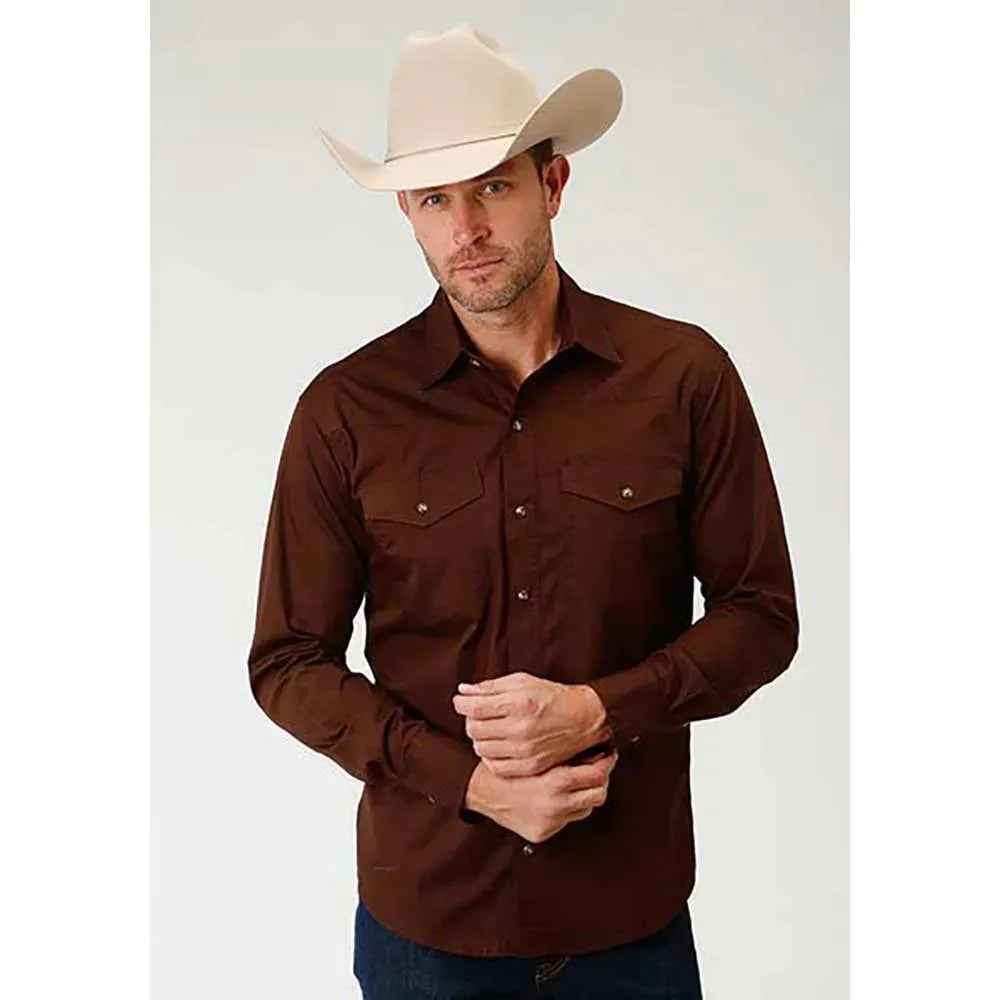
Choosing a Western shirt looks simple until two good options are hanging side by side: one clean and solid, the other carrying a paisley, Aztec, foulard, stripe, or small allover print. Both can work with jeans and boots, but they do different jobs in a man's wardrobe. A solid Western shirt is usually the easier repeat-wear piece. A patterned Western shirt creates more visual identity and can carry an outfit with fewer accessories.
If you are building a modern Western wardrobe rather than a costume, the useful question is not whether solids or patterns are “more Western.” It is which one fits the role you need the shirt to play. This guide compares solid vs. patterned Western shirts for men by versatility, outfit balance, jeans and boot pairings, work-to-weekend use, and buying value.
Solid vs. patterned Western shirts: the quick answer
Buy a solid Western shirt first if you want maximum versatility. It is easier to repeat, layer under jackets, pair with different denim washes, and dress slightly up or down. Choose a patterned Western shirt when you want the shirt itself to become the focal point. A controlled print can add personality without requiring a loud belt, jacket, or pair of boots.
For a first purchase, a solid black, navy, brown, slate, cream, or muted green is hard to beat. Once you already own a dependable neutral shirt, a paisley, geometric, stripe, or foulard print adds range. Veloura's broader men's shirts collection makes it easy to compare both approaches in the same place.
| Factor | Solid Western Shirt | Patterned Western Shirt |
|---|---|---|
| Versatility | Very high | Moderate to high, depending on the print |
| Visual impact | Clean and understated | Stronger focal point |
| Best for layering | Excellent | Best with simple outer layers |
| Easiest denim pairing | Almost any wash | Usually best with quieter denim |
| Repeat wear | Easy to rotate often | More memorable, so rotation matters more |
| First Western shirt | Usually the safer buy | Best if you already know your style |
What makes a Western shirt feel Western in the first place?
Color and print are only part of the equation. Western character usually comes from the construction: pointed or curved yokes, chest pockets, snap fronts, shaped cuffs, contrast stitching, or a collar with more presence than a standard office shirt. A shirt can be completely solid and still read unmistakably Western.
That matters because men sometimes overcorrect when trying to “look Western” and assume every piece needs a bold print. It does not. A clean snap-front shirt with defined yokes can communicate the style through shape alone. If you are deciding between closures as well as patterns, Veloura's pearl snap vs. button-down shirt guide explains how those details change the look.
The goal is balance. Veloura's guide to wearing Western shirts without looking overdressed makes the same broader point: one or two strong Western signals are often enough.
Why solid Western shirts are easier to style
A solid shirt gives the rest of the outfit more room. Dark denim, faded denim, a textured leather belt, a waxed jacket, and cowboy boots can all contribute without competing for attention. That makes a solid Western shirt especially useful for men who want one piece that can move from a casual workday to dinner or a weekend event.
1. They work with more denim washes
Solid shirts are forgiving. A black or charcoal shirt can sharpen medium-wash jeans. A cream or light blue shirt can brighten dark denim. Earth tones work naturally with indigo, brown boots, and worn leather. If denim color is where you usually get stuck, start with the guide to shirt colors with dark-wash jeans, then browse Veloura's men's jeans for the silhouette you want.
2. They make layering simpler
A solid shirt can sit under a denim jacket, waxed canvas jacket, vest, or blazer without creating visual noise. That is useful in fall and winter, but it also matters in air-conditioned offices, restaurants, and evening settings where a second layer comes on and off.
3. They let accessories carry more character
If your boots have contrast stitching, your belt has a prominent buckle, or your jacket has texture, a solid shirt prevents the outfit from becoming a collection of competing statements. That does not mean the shirt is boring. Western yokes, pearl snaps, pocket shape, and fabric texture still give it identity.
A good live example is the Roper Solid Poplin Snap men's Western shirt. Its product listing highlights a 100% cotton poplin construction, pearl snaps, snap cuffs, chest pockets, and front-and-back yokes. Those details do the Western work even without an allover print.

When a patterned Western shirt is the better choice
Patterned Western shirts make sense when the outfit needs a center. A small paisley, foulard, stripe, medallion, or geometric print can create depth that a basic solid cannot. The key is to let that print do the talking instead of adding three more loud pieces around it.
1. You want a stronger night-out look
For a country bar, concert, date night, or weekend event, a patterned shirt can make dark jeans and straightforward boots feel intentional with almost no extra effort. Veloura's country-bar outfit guide is useful if that is the setting you are dressing for.
2. Your jeans and boots are already simple
A patterned shirt is easiest when the foundation is quiet: dark or medium-wash jeans, a restrained belt, and boots without excessive contrast. That gives the print a clean background. If you like bootcut denim, the bootcut jeans styling guide shows how to build the lower half of the outfit without losing proportion.
3. You want personality without piling on accessories
A print can replace the need for a statement buckle, bright jacket, or multiple accessories. This is one of the easiest ways to make modern Western style feel personal rather than theatrical.
For a stronger printed option, the Roper 2171 Pop Color Aztec Print Western Shirt uses a horizontal Aztec-inspired print with pearl snaps, Western yokes, pockets, and a 100% cotton poplin construction according to its live listing. Pair a shirt like this with relatively simple men's boots and let the pattern remain the focal point.

Pattern scale matters as much as whether a shirt is patterned
Not all patterns behave the same way. A tiny foulard or low-contrast paisley can function almost like a textured solid from several feet away. A large Aztec motif or high-contrast floral makes a much stronger statement. That means the useful comparison is not simply “solid versus print.” It is also quiet versus high-contrast.
- Microprints and small foulards: easiest patterned shirts to dress up and repeat.
- Thin stripes and subtle checks: flexible for casual or smart-casual outfits.
- Paisley: can range from understated to bold depending on color contrast.
- Geometric and Aztec-inspired prints: strongest Western statement; best with simple jeans and accessories.
- Large novelty prints: more casual and memorable, so they work best when the occasion supports them.
If you are easing into patterns, pick one where the base color already matches clothing you own. A grey print for a wardrobe full of black and indigo denim is easier to use than a bright multi-color print that requires new supporting pieces.
Which shirt works better with cowboy boots?
Both do. Cowboy boots do not require a patterned shirt, and a patterned shirt does not require decorative boots. The deciding factor is how much visual detail is already below the waist.
If your boots have bold shaft stitching, exotic texture, a distressed finish, or a pronounced toe shape, a solid Western shirt often creates better balance. If your boots are clean brown or black leather with restrained detail, a patterned shirt has more space to stand out.
The same rule applies to belts. A large buckle and a high-contrast shirt can work together, but the combination feels more deliberate and less versatile. A quieter buckle is the easier match for a strong print. Browse men's belts or Western gear after choosing the shirt rather than starting with every statement piece at once.
Solid or patterned Western shirt for work?
For workplaces where Western shirts are appropriate, solids and small patterns are normally the easiest to repeat because they attract less attention and combine with more pants and outerwear. A solid snap shirt can look polished while still feeling relaxed, especially in darker or muted colors.
Patterned shirts can work too, particularly when the pattern is small and the color palette is controlled. The important distinction is between style and protective workwear. A Western-looking cotton shirt is not automatically flame resistant, high visibility, or compliant with a jobsite requirement. If your job calls for protective clothing, use the garment's actual certification and your employer's requirements as the deciding factors. Veloura has separate education on FR pearl snap shirts for that context.
Solid or patterned Western shirt for a night out?
A night out gives patterns more room. Under lower lighting, texture and print help a shirt read as intentional without needing a jacket. Pair a patterned Western shirt with dark jeans and clean boots for an easy formula. If the shirt is very bold, skip a loud jacket and let the pattern handle the visual interest.
A solid shirt can still be the better night-out choice when the fit is sharp and the accessories are stronger. A black or deep-colored pearl snap with dark denim, a good belt, and clean boots can look more refined than a busy print. The pearl snap outfit guide offers more combinations across casual and dressier settings.
Fit comes before pattern
A great print cannot rescue a shirt that collapses at the shoulders, pulls across the chest, or hangs far past the proportions of the outfit. Likewise, a basic solid looks expensive when the shoulder seams, sleeve length, chest room, and hem all sit correctly.
Before deciding on the visual design, confirm the size and intended fit. Veloura's pearl snap fit guide covers the shoulder, chest, sleeve, and hem checkpoints that matter. If you plan to tuck the shirt, also consider how much fabric remains around the waist; if you wear it untucked, pay closer attention to hem length.
How to choose if you are building a Western wardrobe from scratch
If you are buying your first two or three Western shirts, build range instead of buying near-duplicates.
- Start with one versatile solid. Choose a neutral or muted color that works with your most-worn jeans and boots.
- Add one controlled pattern. Pick a print that uses colors already present in your wardrobe.
- Then add a stronger statement. Once the basics are covered, a bolder paisley, geometric, stripe, or seasonal color gives the rotation personality.
That approach mirrors the broader idea behind modern Texas men's style: practical pieces can still have character when each item has a clear role. Even today's Slate Pearl Snap style edit shows how a quieter shirt can anchor an easy outfit without needing to dominate it.
Buying checklist: solid vs. patterned Western shirt
Before checking out, answer these questions:
- Will this shirt work with at least two pairs of jeans I already own?
- Are my usual boots simple enough for a bold print, or detailed enough that a solid would balance them better?
- Do I need the shirt for repeated weekly wear or occasional statement outfits?
- Will I layer it under a jacket or wear it mostly on its own?
- Is the pattern scale appropriate for the places I plan to wear it?
- Does the fit work both standing and sitting?
- If it is sold as workwear, have I verified any job-specific protection requirements separately?
If you answer those first, the purchase becomes much less about chasing a trend and more about filling a real wardrobe gap.
Frequently asked questions
Are patterned Western shirts more casual than solid Western shirts?
Not always. Pattern size and contrast matter more than the mere presence of a print. A small, muted foulard can look more polished than a bright solid shirt, while a large high-contrast print usually reads more casual and expressive.
Can a solid pearl snap shirt be dressed up?
Yes. A clean solid pearl snap with dark jeans or tailored trousers, restrained boots, and a structured jacket can move into smart-casual territory. Keep the shirt fit sharp and the color palette controlled.
What jeans look best with a patterned Western shirt?
Dark or medium-wash jeans are the easiest choice because they create a quiet base. Heavy fading, embroidery, or high-contrast stitching can compete with a strong shirt pattern, although subtle patterns can handle more denim detail.
Should a patterned Western shirt match the color of my boots?
It does not need to match exactly. Coordination is more useful than matching. Brown boots work with many earth-tone, blue, cream, rust, and muted prints; black boots work naturally with grey, black, white, blue, and cooler palettes.
Which is better for a first Western shirt: solid or patterned?
For most men, solid is the easier first buy because it works across more outfits and layers. If your wardrobe is already mostly neutral and you want one piece to add character, a patterned Western shirt can make sense as the first purchase.
Can I wear a patterned Western shirt with a statement belt?
Yes, but one should usually be visually stronger than the other. A bold shirt with a restrained buckle is the simplest formula. If the buckle is the centerpiece, choose a smaller or lower-contrast shirt pattern.
The bottom line
Solid Western shirts win on versatility; patterned Western shirts win on instant personality. Neither is inherently more authentic or more stylish. The better purchase is the one that solves a specific outfit need. If you need a shirt you can wear repeatedly with different denim, jackets, belts, and boots, start solid. If your wardrobe already has a dependable foundation and needs a focal point, add a pattern.
Explore Veloura's Western and men's shirts, then build the rest of the outfit through jeans, boots, and Western gear. The strongest Western wardrobe is not the loudest one—it is the one where every piece has a reason to be there.