What to Wear to a Wedding for Men: Dress Codes
August 29, 2026 · Admin
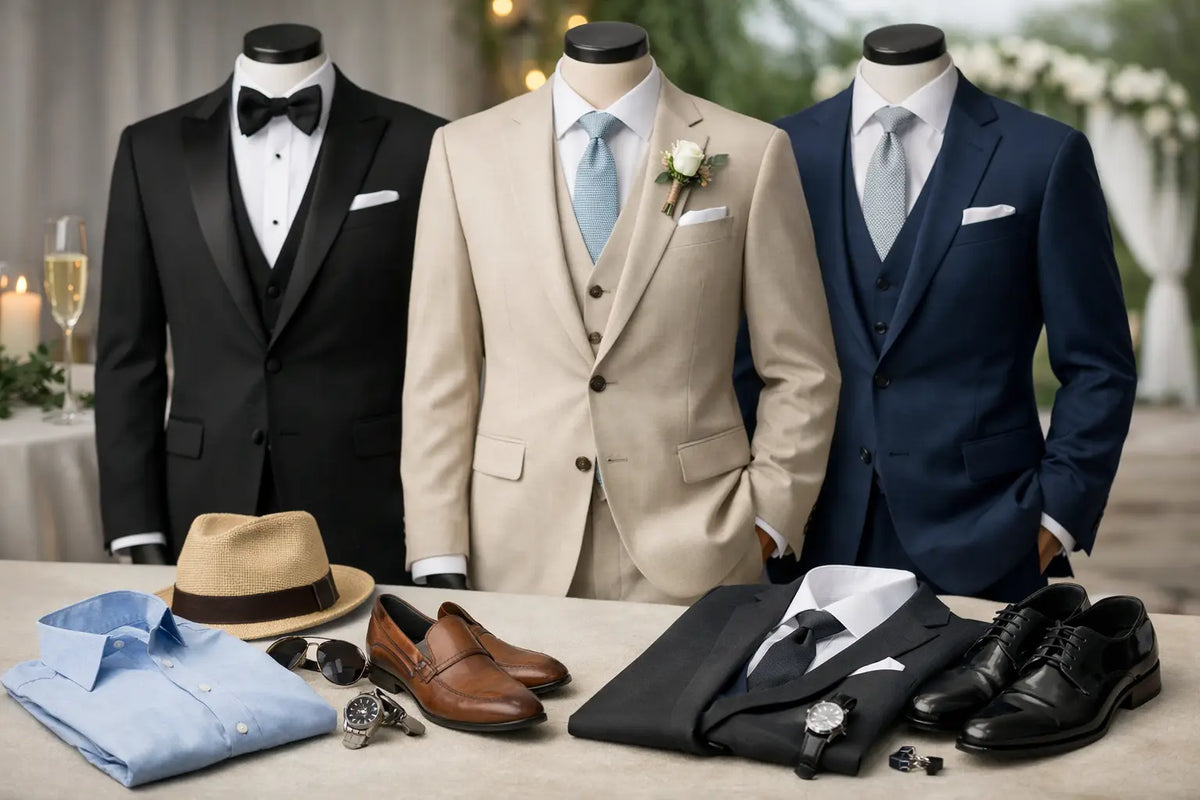
A wedding invitation is not the time to test-drive a questionable outfit. What to wear to a wedding for men comes down to reading the room before you enter it: the stated dress code, the venue, the season, and the couple’s style all matter. Your job is simple. Look sharp, feel comfortable, and show respect for an occasion that deserves more than whatever happened to be clean.
The strongest wedding outfit is rarely the loudest one. It is the one that fits cleanly, works with the setting, and lets the groom remain the best-dressed man in the room. Dress like you mean it, but do not compete with the moment.
What to Wear to a Wedding for Men Starts With the Dress Code
The invitation gives you the lead. Follow it. If the dress code is unclear, look at the venue and time of day, then choose the slightly more polished option. Being modestly overdressed shows intention. Being underdressed can make you look like you missed the assignment.
Black Tie
Black tie means a tuxedo. A black tuxedo is the safest choice, while midnight navy can look equally refined under evening lighting. Wear a formal white dress shirt with a turndown or wing collar, a black bow tie, black silk lapels, and polished black dress shoes.
Keep the details disciplined. A white pocket square is enough. Skip novelty socks, loud watches, colorful ties, and oversized boutonnieres. A tuxedo should create a clean, powerful silhouette, not invite a debate.
If the invitation says black tie optional, a tuxedo is still welcome. If you do not own one, wear a dark navy or charcoal suit with a crisp white shirt, conservative tie, dark socks, and polished black shoes. This is not the moment for a light-gray suit or brown loafers.
Formal or Cocktail Attire
For most evening weddings, a dark suit is the right answer. Navy and charcoal are the dependable standards because they photograph well, work across seasons, and feel appropriate without looking severe. Pair your suit with a white or light-blue dress shirt and a silk tie in a restrained color or pattern.
A deep burgundy, forest green, muted blue, or small-scale print can add personality without pulling focus. Finish with black or dark brown leather oxfords, derbies, or sleek loafers depending on the formality of the venue. A belt should match your shoes in color and finish.
Cocktail attire gives you more room to move, but not permission to get careless. A sharp suit remains the best choice. You can wear a knit tie, a textured sport coat with tailored trousers, or a darker patterned shirt only if the couple’s style and venue clearly support it. When in doubt, put on the suit.
Semi-Formal and Dressy Casual
Semi-formal is where many men overcorrect. They hear “casual” and reach for jeans. Leave them home unless the invitation specifically calls for denim or the wedding is unmistakably relaxed.
Start with tailored chinos or wool trousers in navy, gray, tan, or olive. Add a button-front shirt, then build upward with a sport coat if the setting calls for it. A knit polo can work for a warm-weather daytime wedding, but only when it is structured, clean, and paired with tailored trousers and refined shoes.
Dressy casual still demands shape. A well-fitted unstructured blazer, a crisp button-down, chinos, and leather loafers are difficult to get wrong. The goal is relaxed polish, not office-casual leftovers.
Let the Venue and Season Set the Tone
An invitation can say cocktail attire, but a rooftop in August calls for different fabric choices than a ballroom in December. The dress code establishes the level of formality. The environment determines how you make it work.
For spring and summer weddings, choose breathable materials. Lightweight wool, cotton, linen, and linen-blend suits help you stay composed when temperatures climb. Navy, medium blue, tan, stone, and soft gray all work well in daylight. Linen wrinkles naturally, so accept a little texture as part of the fabric’s character. Just make sure the garment begins the day pressed and properly fitted.
For fall and winter, deeper colors and richer textures earn their place. Charcoal, navy, dark brown, olive, and burgundy feel right against cooler weather. Wool suits, brushed cotton shirts, and textured ties add depth without requiring a loud pattern. A clean overcoat is better than throwing a puffer jacket over a suit when the ceremony is formal.
Beach and destination weddings require judgment. A linen suit or lightweight blazer with tailored trousers is often ideal. Depending on the invitation, you may be able to skip the tie, but keep the shirt crisp and your shoes intentional. Leather loafers, suede loafers, or clean dress sandals can work where the setting genuinely calls for them. Flip-flops, athletic slides, and cargo shorts do not.
Barn, ranch, and rustic weddings can support a more rugged look, but the standard is still elevated. A western shirt, dark clean denim, boots, and a tailored jacket may be appropriate if that reflects the couple and venue. Choose dark, fitted jeans with no rips or aggressive fading. Your boots should be clean, conditioned, and suited to the event, not fresh from the jobsite.
Fit Carries More Weight Than the Label
A moderately priced suit that fits well will always look stronger than an expensive suit that hangs off your frame. The shoulder seam should sit at your natural shoulder. Your jacket sleeves should reveal about a quarter to a half inch of shirt cuff. Trousers should sit cleanly at the waist and break lightly over your shoes.
Avoid a jacket that pulls across the chest, trousers that stack heavily at the ankle, or sleeves that swallow your hands. These details signal neglect, even when every individual piece is technically formal.
If you are buying for the occasion, prioritize the pieces you can wear again. A navy suit, white dress shirt, dark brown shoes, and a versatile belt will cover weddings, interviews, dinners, and business events for years. That is the kind of wardrobe investment that earns its place.
Tall men should pay special attention to sleeve and inseam length rather than sizing up the entire garment. Broad-shouldered men need room through the chest without excess fabric through the waist. The right fit is not about squeezing into a smaller size. It is about a clean line that allows you to move, sit, eat, and dance without fighting your clothes.
Finish the Look Without Overdoing It
Accessories should support the outfit, not take it over. A simple watch, leather belt, pocket square, and clean dress shoes are usually enough. If you wear a tie bar, keep it narrow and place it between the third and fourth buttons of your shirt. Cufflinks make sense for a French-cuff shirt or tuxedo, not as an automatic requirement.
Grooming is part of the outfit. Get your haircut a few days before the event, not an hour before it. Trim facial hair, clean your nails, and make sure your shoes are polished. These small actions make a suit look considered rather than borrowed.
Fragrance belongs in the same category: present, controlled, and never overpowering. Apply one or two sprays to pulse points before you leave. A wedding involves close conversation, shared tables, and crowded dance floors. Your scent should register only when someone is near you.
What Not to Wear to a Wedding
There are exceptions to every rule, but some choices create unnecessary risk. Avoid white or ivory shirts only when paired with a suit? No. A white dress shirt is always appropriate. What you should avoid is wearing a white or cream suit that could visually compete with the groom, especially at a formal event.
Also leave behind graphic T-shirts, athletic sneakers, distressed denim, cargo pants, baseball caps, visibly worn belts, and anything with offensive branding. Even a laid-back wedding is still a ceremony and a celebration. Your outfit should reflect that.
If you are unsure whether a piece is too casual, ask one question: would you be comfortable standing beside the couple in a professional photo? If the answer is no, choose something sharper.
A wedding is one of the rare occasions where making an effort is never a mistake. Build your look around the dress code, refine it for the setting, and make fit nonnegotiable. The right outfit lets you celebrate fully, move with confidence, and show up as the man the occasion calls for. That standard is always worth meeting.