How to Wash FR Clothing: Men’s Flame-Resistant Workwear Care Guide
September 12, 2026 · Isaac Bounds
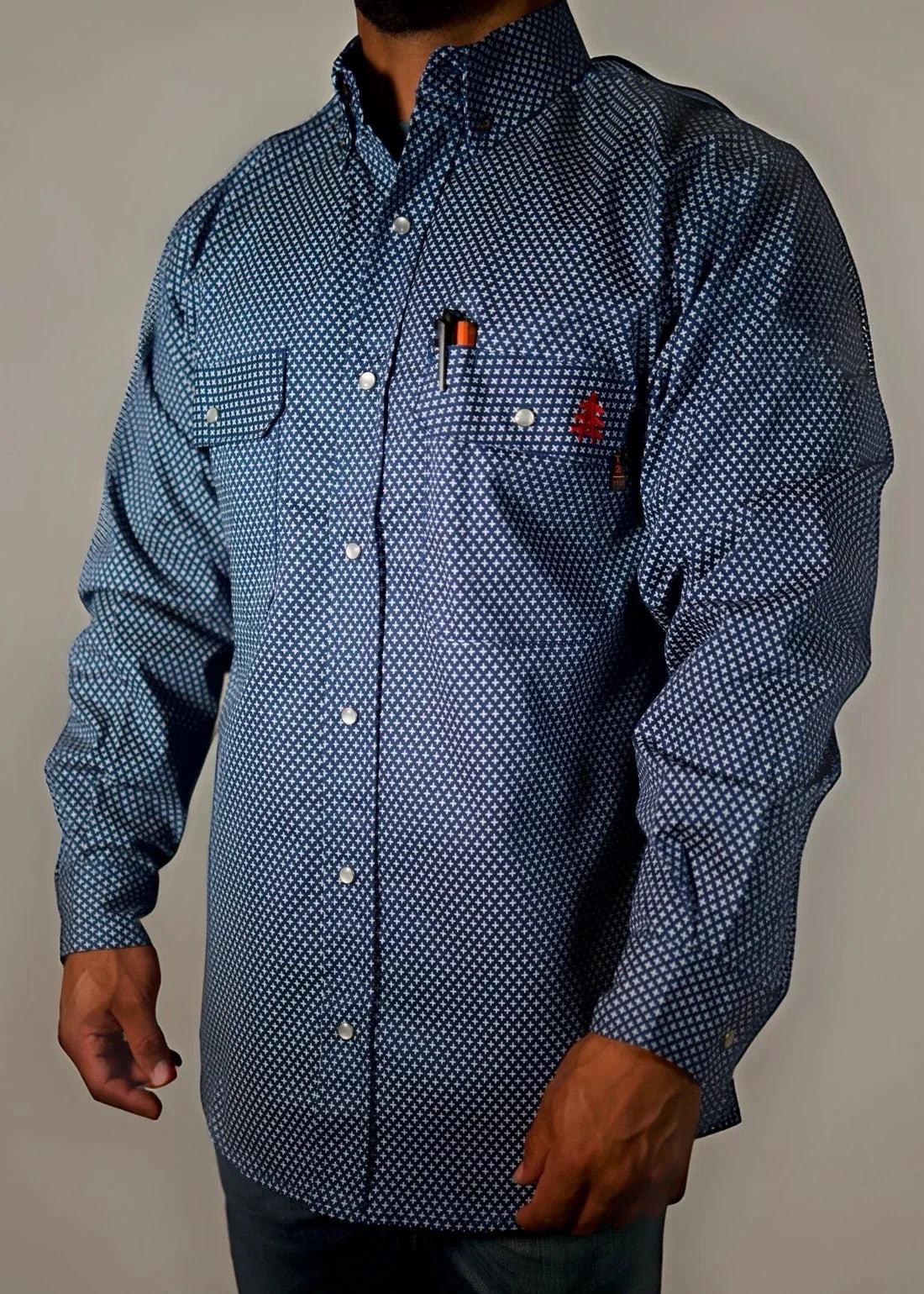
Flame-resistant workwear is built for a different job than ordinary denim and casual shirts, so it deserves a different laundry mindset. If your work requires FR clothing, washing it correctly is not about making a shirt or pair of jeans look newer for longer. It is about keeping the garment clean, serviceable, and consistent with the care instructions attached to the protective clothing you actually own.
The most important rule is simple: the sewn-in care label, garment manufacturer instructions, and your employer’s PPE program come before generic laundry advice. FR fabrics, finishes, trims, ratings, and permitted laundering methods can vary. A routine that is acceptable for one garment might not be the right choice for another.
If you are still learning the basics of protective Western workwear, start with Veloura’s guides to what an FR pearl snap shirt is and how FR jeans differ from regular denim. This guide focuses on the next question: how do you actually care for FR shirts and jeans once they are in your workwear rotation?
Start With the Care Label, Not a Generic Laundry Rule
Search for “how to wash FR clothing” and you will find plenty of one-size-fits-all advice. That is the wrong place to start. Some flame-resistant garments use inherently flame-resistant fibers, while others use fabrics that have been treated to achieve specified performance. Garments can also have different laundering limits, closures, reflective components, reinforcements, or workplace-specific requirements.
Before the first wash, read the complete care label. Look for the permitted wash temperature, detergent restrictions, bleach warnings, drying method, ironing limits, and any maximum number of laundering cycles if one is stated. If a garment is part of a workplace PPE program, follow that program as well. A washing machine cannot turn an incorrectly selected or under-rated garment into appropriate PPE for a hazard.
This is especially important when you are shopping across a broader men’s work shirt collection or building a mixed rotation of FR and non-FR pieces. Similar-looking Western shirts can serve very different purposes.
How to Wash FR Clothing in 7 Practical Steps
1. Inspect the garment before it goes in the washer
Do a quick inspection before every wash. Check for tears, thinning fabric, damaged seams, failed snaps or zippers, worn cuffs, and visible contamination. This gives you a chance to catch damage before a normal wash-and-dry cycle makes it harder to notice.
If the garment has been heavily exposed to oil, fuel, solvent, grease, or another flammable substance, do not treat it like an ordinary dirt stain. Follow your employer’s contamination procedure and the garment manufacturer’s instructions. Protective clothing that remains contaminated after laundering may need to be removed from service.
2. Empty pockets and prepare closures
Remove pens, metal pieces, shop rags, receipts, and anything else that could damage the garment or washer. Check pocket corners because work pants tend to collect debris. If the care label does not instruct otherwise, fastening snaps or zippers can help reduce snagging during a wash cycle.
3. Sort the load appropriately
Follow the garment label or workplace laundry policy. As a practical default, avoid combining heavily soiled FR workwear with towels, lint-heavy items, or household laundry that could transfer residues. Some employers or manufacturers may call for separate laundering entirely. When there is a conflict between a general habit and the actual label, the label wins.
4. Use the water temperature the label permits
Do not assume hotter is always better or colder is always safer. Use the temperature range specified for the garment. The goal is to remove soil and contaminants while staying inside the maker’s laundering instructions. If a permitted warmer cycle is needed to clean a heavily soiled garment, follow the label rather than relying on a universal “cold wash only” rule.
5. Use an appropriate detergent and skip unapproved additives
A straightforward detergent that is compatible with the garment’s care instructions is usually the sensible choice. Avoid improvising with laundry additives that the manufacturer does not permit. Chlorine or oxidizing bleach, fabric softeners, dryer sheets, and starch are common examples of products that may be restricted for FR workwear.
Do not use a homemade stain-removal experiment on protective clothing just because it works on ordinary jeans. Vinegar, specialty solvents, or other household remedies can introduce unnecessary variables. If a difficult stain will not come out with a permitted process, check the manufacturer or workplace procedure instead.
6. Re-check contamination before drying
Drying is not the time to discover that a fuel or grease stain is still present. Inspect heavily soiled areas after washing. If a flammable contaminant remains, do not simply send the garment through a hotter dryer cycle and hope for the best. Follow the approved rewash, professional laundering, or removal-from-service process for that garment and workplace.
7. Dry according to the label and inspect again
Use the permitted dryer temperature or air-drying method. Avoid unnecessary over-drying or excessive heat. Once the garment is dry, inspect the fabric, seams, closures, and high-wear zones again. Regular inspection is one of the easiest ways to keep a workwear rotation from quietly turning into a pile of pieces that should have been repaired or replaced.
What Should You Avoid When Washing FR Clothing?
The safest answer is anything the garment label says not to use. Several categories deserve extra attention:
- Unapproved bleach: Do not use chlorine or other oxidizing bleach unless the specific garment manufacturer allows it.
- Fabric softener and dryer sheets: Avoid them unless the exact care instructions confirm compatibility. Residues and manufacturer restrictions can matter with protective workwear.
- Starch: Skip it unless specifically permitted.
- Unknown stain chemicals: A strong shop solvent may remove a mark while creating a different problem. Use an approved process.
- Extreme heat: More heat does not automatically mean cleaner clothing. Stay within the care-label limits.
- Ignoring persistent contamination: A garment that still smells strongly of fuel or visibly carries an oily residue is not simply “good enough” because it completed a wash cycle.
For a broader explanation of how protective work shirts fit into a working wardrobe, see Flame Resistant Western Work Shirts That Earn Trust.
How to Wash FR Pearl Snap Shirts
FR pearl snaps combine a recognizable Western silhouette with workwear construction, but the snaps do not change the first rule: read the specific garment’s label. Pay extra attention to areas that collect sweat and jobsite soil, including the collar, cuffs, chest, underarms, and lower front.
Before washing, inspect the snap hardware and surrounding fabric. A snap that is pulling through weakened material, a torn placket, or a badly worn cuff deserves attention before the shirt goes back into service. Repairs to protective garments should follow manufacturer or employer requirements and use appropriate materials; an improvised patch is not automatically equivalent to the original construction.
Veloura shoppers building this side of their wardrobe can browse men’s work shirts and the broader Western gear collection. A current example is the Honor Navy FR Pearl Snap Work Shirt. Always verify the actual rating, label, fit, and care instructions for your job before purchase or use.
How to Wash FR Jeans
FR jeans can look close to ordinary work denim, which makes it easy to fall into normal denim-care habits without checking the label. Protective denim should be treated according to its own instructions rather than an internet rule such as “never wash jeans” or “wash denim as little as possible.” If work contaminants are present, keeping them in the fabric to preserve color is the wrong priority.
Turn your attention to the areas that work hardest: knees, seat, hems, pockets, belt loops, and the fabric around the zipper. Check the hem for excessive wear if your jeans stack over boots or drag near the floor. The earlier you notice damage, the easier it is to decide whether the garment needs an approved repair or replacement.
If you are comparing protective denim with everyday jeans, Veloura’s FR jeans vs. regular denim guide explains the difference in purpose. You can also browse the men’s jeans collection. Current FR options include the Alpha FR Boot Cut Relaxed Fit Jeans and Spartan FR Boot Cut Relaxed Fit Jeans.
What Should You Do With Oil, Fuel, or Heavy Contamination?
This is where FR clothing care moves beyond routine laundry. If a garment has substantial flammable contamination, follow the garment maker’s instructions and your employer’s PPE or laundering procedure. Do not assume that one household wash removes every hazardous residue.
After washing, inspect and smell the garment. If contamination is still evident, keep it out of service until it has been handled according to the approved process. Depending on the garment and workplace, that might mean rewashing with an approved method, using an industrial laundry program, consulting the manufacturer, or replacing the item.
The key distinction is that FR clothing is part of a safety system. Cosmetic cleanliness is not the only question. Persistent combustible contamination, major fabric damage, or an unknown laundering history can matter even when the garment still looks wearable from across the room.
Does Flame-Resistant Protection Wash Out?
There is no responsible universal answer for every FR garment. The construction matters. Some garments use inherently flame-resistant fibers; others achieve performance through treated fabric. Manufacturers can specify different service-life or laundering limits, and a garment’s condition also matters.
Do not rely on the phrase “FR never washes out” as a substitute for the product label. Likewise, do not assume every FR garment loses its protection after a handful of home washes. Read the certification and care information attached to the actual garment and respect any stated laundering life.
For shoppers new to this category, What Is an FR Pearl Snap Shirt? is a useful starting point because it explains why the garment label and job requirements matter before style enters the equation.
When Should FR Workwear Be Replaced?
A calendar date alone does not tell the whole story. Inspect protective workwear regularly and follow the manufacturer and employer criteria. Reasons to stop and evaluate a garment can include:
- Persistent oil, fuel, solvent, or other flammable contamination that approved laundering does not remove.
- Holes, tears, thinning, severe abrasion, or open seams.
- Damaged closures or hardware that affect the garment’s intended coverage or function.
- Unauthorized repairs or modifications.
- A manufacturer-stated laundering or service-life limit that has been reached.
- Missing or unreadable identification when your workplace requires the rating or label to be verified.
When you are unsure whether a damaged garment remains acceptable PPE, do not guess. Check with the employer safety program, garment manufacturer, or other qualified source responsible for the protective-clothing requirements at your job.
Build an FR Workwear Rotation That Is Easier to Maintain
A practical workwear rotation is not just about having more outfits. Having enough appropriate shirts and jeans can make it easier to remove dirty or contaminated clothing from service promptly instead of stretching one garment across too many shifts because nothing clean is available.
Veloura’s men’s workwear capsule wardrobe guide covers the broader idea of building around repeatable essentials, while 10 men’s workwear outfit ideas shows how work pieces can form practical combinations. For FR requirements, however, the protective specification comes first. A coordinated outfit is useful only when each required garment is appropriate for the actual hazard and job policy.
A simple rotation can also help you track condition. Instead of throwing every work shirt into one pile, keep a consistent laundry routine, inspect garments as they come out, and retire questionable pieces before they become the default shirt you grab in a hurry.
FR Clothing Care FAQ
Can you put FR clothing in the dryer?
Many FR garments permit machine drying, but the temperature and method vary. Follow the sewn-in care label. If tumble drying is allowed, avoid exceeding the stated temperature or unnecessarily over-drying the garment.
Can you wash FR clothing with regular clothes?
It depends on the garment instructions and workplace policy. Some programs call for separate laundering. As a practical rule, avoid mixing heavily soiled protective workwear with household items that can transfer lint or residues, and follow any explicit separation instructions on the label.
Can you use fabric softener on FR clothes?
Do not assume it is compatible. Many FR care programs advise against softeners or residue-forming products. Use only laundry products permitted by the specific garment manufacturer.
How often should FR clothing be washed?
Wash it often enough to remove normal soil and any workplace contaminants according to the garment and employer instructions. Avoid generic denim advice that encourages leaving dirty workwear unwashed simply to preserve color. If the garment is contaminated, address it promptly through the approved process.
What if grease or fuel will not come out?
Do not keep wearing the garment just because the stain is familiar. Persistent flammable contamination can be a reason to remove a protective garment from service. Follow the manufacturer and employer procedure for rewashing, professional laundering, evaluation, or replacement.
Can damaged FR clothing be patched at home?
Do not assume a normal patch, thread, or iron-on repair is appropriate for protective clothing. Follow the garment manufacturer or workplace repair requirements so compatible materials and methods are used.
The Bottom Line
The best answer to “how do I wash FR clothing?” starts with the garment in your hands, not a universal internet recipe. Read the label, use compatible laundry products, remove contamination, dry within the permitted limits, and inspect the garment before it returns to work. Proper care helps preserve the garment you selected, but it does not replace correct PPE selection, hazard assessment, or workplace requirements.
To continue building the cluster, read Veloura’s guides to flame-resistant Western work shirts, FR jeans, and a men’s workwear capsule wardrobe. When you are ready to shop, explore work shirts, men’s jeans, and Western gear—then confirm the labeled protection and care requirements for the job you need the garment to do.