Paisley vs. Plaid Western Shirts for Men: Which Pattern Should You Buy?
September 23, 2026 · Isaac Bounds
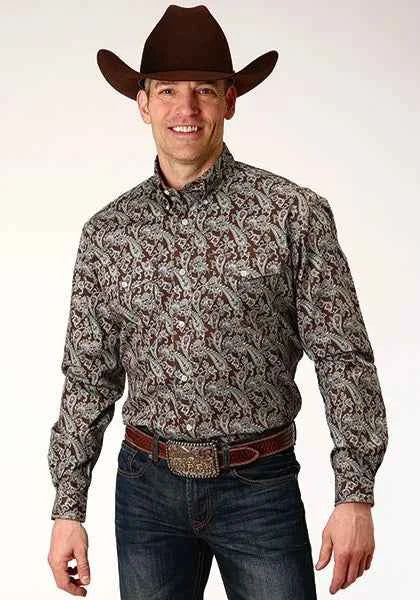
Western shirts do not have to look the same to belong in the same wardrobe. Two of the most useful patterned options are paisley and plaid, but they create noticeably different outfits. Paisley brings curved, ornamental detail and can feel more expressive or dressed up. Plaid relies on intersecting lines and checks, giving it a familiar, easygoing character that works naturally with denim and boots.
If you are deciding between a paisley vs. plaid Western shirt for men, the better choice comes down to where you plan to wear it, how much pattern you want in the outfit, and what is already in your closet. Neither is automatically more “Western” than the other. The shirt’s cut, yoke, pockets, collar, buttons or snaps, fabric, and the rest of the outfit matter just as much as the print.
This guide builds on Veloura’s broader comparison of solid vs. patterned Western shirts by narrowing the decision to two specific pattern families. If you already know you want a patterned shirt, this is the next question to answer.
Paisley vs. Plaid Western Shirts: Quick Comparison
| Feature | Paisley Western Shirt | Plaid Western Shirt |
|---|---|---|
| Visual character | Curved, ornamental, more decorative | Linear, checked, familiar and casual |
| Easiest styling lane | Date night, dinner, country bar, elevated casual | Weekend, everyday casual, ranch-inspired and workwear-adjacent looks |
| Best denim partner | Clean dark or medium-wash jeans | Dark, medium or stonewash jeans depending on contrast |
| Footwear | Brown or black cowboy boots both work | Brown boots are especially easy; black can sharpen darker plaids |
| Pattern mixing | Usually best with quieter accessories | Usually best with simple denim and restrained accessories |
| Best first patterned shirt? | Great if you want personality | Usually the easier entry point for a conservative wardrobe |
The short version: choose paisley when you want the shirt to carry more of the outfit. Choose plaid when you want a patterned shirt that still feels familiar and easy to repeat.
What Makes a Paisley Western Shirt Different?
Paisley is built around curved, teardrop-like motifs rather than straight lines. Depending on the scale and color palette, it can be subtle from a distance or become the main visual feature of the outfit. On a Western shirt, that detail can work especially well because Western styling already includes strong design elements such as pointed yokes, flap pockets, embroidery, snaps, or contrast stitching.
The key is balance. A brown, navy, black, cream, or muted paisley is easier to wear repeatedly than a high-contrast print with several bright colors. If the shirt already has a detailed pattern, let your jeans, belt, and boots support it rather than competing for attention.
A live example in Veloura’s current men’s shirts collection is the Roper 1218 Pine Paisley men’s Western shirt. Its product details list 100% cotton, a button-down collar, a one-point back yoke, two one-point pockets and flaps, and Roper embroidery. Those details give the paisley print a clear Western frame instead of making the shirt feel like a generic patterned dress shirt.

What Makes a Plaid Western Shirt Different?
Plaid is made from intersecting horizontal and vertical bands, so its visual structure feels more orderly than paisley. In Western menswear, plaid is easy to understand because it already sits comfortably beside denim, leather, canvas, boots, and workwear-inspired pieces. That familiarity makes plaid one of the simplest ways to add pattern without making the shirt feel like a special-occasion item.
Not all plaid behaves the same way. A brown-and-white check can read neutral and rugged. A purple, turquoise, or multi-color plaid makes a stronger statement. Small checks often feel neater, while large high-contrast checks can look more casual. The pattern scale matters almost as much as the colors.
Veloura currently carries the Cinch Brown/White Plaid men’s shirt, whose listing describes a long-sleeve cotton-spandex construction with stretch material and white buttons. It is a useful example of why plaid works as an everyday option: the color combination is grounded, while the check gives the shirt enough visual texture to avoid looking plain.

Which Pattern Looks Better With Cowboy Boots?
Both do. The better question is what role you want the boots to play.
With paisley, the shirt often becomes the focal point. A clean pair of brown or black boots keeps the lower half of the outfit controlled. If you are still building your boot rotation, Veloura’s guide to cowboy boot colors that go with almost everything can help you choose a versatile base.
With plaid, especially brown, tan, green, navy, or burgundy plaid, brown leather boots usually create an easy visual connection. Dark plaid can also work well with black boots when you want a sharper line. If you are deciding between those two footwear directions, compare the examples in brown vs. black cowboy boots for men.
You can browse Veloura’s current cowboy and Western boots alongside the shirts rather than choosing each piece in isolation.
Which Pattern Works Better With Jeans?
Denim is the easiest bridge between a patterned Western shirt and cowboy boots. The goal is not to perfectly “match” the shirt and jeans. It is to keep the outfit from becoming visually busy.
Paisley with dark wash jeans
Dark denim is a strong partner for paisley because it provides a clean, quiet base. A brown paisley shirt with dark jeans and medium-brown boots works for dinner, a country bar, or a casual date without requiring a blazer. A navy or black paisley can work with dark denim and black boots for an even sharper combination.
If you want help choosing the top half around darker denim, see what shirt colors go with dark wash jeans.
Plaid with medium or stonewash jeans
Plaid can handle a little more texture below the waist because the pattern already feels casual. Medium-wash or stonewash denim can work especially well with earth-tone plaid. Dark denim remains the safer choice when the plaid itself uses several colors.
Veloura’s stonewash vs. dark wash jeans comparison explains how the two washes change an outfit around boots. You can also browse the current men’s jeans collection for live options.
Which Is Better for a Country Bar or Date Night?
Paisley gets a slight edge when you want the shirt to look intentional after dark. The curved pattern can give a simple jeans-and-boots outfit more personality without needing extra layers. That is especially useful when the dress code is casual but you still want to look like you planned the outfit.
Plaid is still a good night-out option, particularly in darker colors or a tighter pattern. It simply leans more relaxed. If the destination is a casual bar, live music venue, brewery, or patio, plaid can look completely at home.
For complete outfit formulas, connect this decision to Veloura’s men’s country bar outfit guide or the more polished Western date-night outfit guide for men.
Which Is Better for Everyday Texas Style?
Plaid is usually the easiest repeat-wear pattern because it blends naturally with the pieces many men already own: jeans, work-inspired jackets, leather belts, and boots. You can wear the same plaid shirt several ways by changing the wash of the denim, rolling the sleeves, adding a jacket, or switching from boots to casual shoes.
Paisley is useful when a wardrobe already has plenty of solids and basic checks. One paisley shirt can change the feel of the same jeans and boots without requiring a completely different outfit. That makes it a smart second or third patterned shirt rather than something that has to replace plaid.
That balance fits the broader approach in Veloura’s Modern Texas Men’s Style guide: keep the Western references practical, then adjust the level of detail for the setting.
How to Keep Either Pattern From Looking Too Busy
The simplest rule is to let one major pattern lead. If the shirt is paisley or plaid, keep the jeans visually simple and avoid stacking several unrelated statement pieces on top of it.
- Use solid denim: fading is fine, but heavy embroidery or loud contrast stitching adds another visual layer.
- Keep the belt controlled: a tooled Western belt can work, but a very elaborate buckle plus a loud shirt plus decorative boots can become crowded.
- Repeat one color: pick a small color from the shirt and echo it subtly in the boots, belt, jacket, or watch strap.
- Watch pattern scale: a highly detailed paisley or tight plaid usually needs less visual competition elsewhere.
- Use outerwear as a frame: a solid denim, canvas, or suede-look jacket can calm a patterned shirt.
If you are still deciding whether pattern is right for you at all, return to the broader solid vs. patterned Western shirt guide.
Should You Tuck In Paisley or Plaid Western Shirts?
Pattern does not decide whether a shirt should be tucked. Shirt length, hem shape, fit, and occasion matter more.
For a date, dinner, business-casual environment, or a cleaner evening outfit, a tuck can make either paisley or plaid look more structured. For a casual weekend, concert, or relaxed bar setting, an untucked shirt can work when the hem is designed for it and does not hang too low.
Veloura’s guide on when men should tuck in a Western shirt gives a practical framework you can apply beyond pearl snaps.
Paisley vs. Plaid: Which Should You Buy First?
If your wardrobe is mostly solid tees, polos, and plain button-downs, plaid is usually the lower-risk first purchase. It introduces pattern while staying easy to combine with denim and boots.
If you already own a few checks or want a shirt that can carry a night-out outfit by itself, paisley is the more interesting addition. A muted paisley gives you detail without requiring bright color, while a bolder paisley can become the statement piece in a simple wardrobe.
Before buying either one, check the actual product measurements, fabric, collar, closure, and care instructions instead of choosing on print alone. A pattern you love will not help if the shirt does not fit the way you expect. Veloura’s size guide is another useful stop before checkout.
Three Easy Outfit Formulas
1. Brown paisley + dark jeans + brown boots
This is the most polished formula in the group. Keep the belt close to the boot family rather than trying to match every shade exactly. For more on that detail, see whether your belt should match your cowboy boots.
2. Brown or neutral plaid + stonewash jeans + medium-brown boots
This combination leans relaxed and works well for a weekend, casual dinner, outdoor event, or everyday Texas outfit. Add a simple canvas or denim jacket when temperatures drop.
3. Dark paisley or dark plaid + dark jeans + black boots
This is the cleanest evening option. Keep accessories minimal and let the shirt pattern provide the interest. If you want to build around shirts and boots together, Veloura’s shirt-and-cowboy-boot outfit guide provides additional combinations.
Frequently Asked Questions
Are paisley shirts considered Western?
Paisley itself is not exclusive to Western clothing, but it works naturally in Western menswear when the garment uses Western details, proportions, or styling. A paisley shirt with a Western yoke, flap pockets, denim, boots, and a leather belt will read differently from a paisley dress shirt worn with tailored trousers.
Is plaid more casual than paisley?
Often, but not always. Plaid has strong casual and workwear associations, while paisley can feel more decorative. Color, fabric, pattern scale, shirt construction, and the rest of the outfit can easily shift either one up or down.
Can you wear a patterned Western shirt with cowboy boots?
Yes. Cowboy boots are one of the easiest anchors for both plaid and paisley Western shirts. Keep the jeans and accessories relatively simple if the shirt pattern is bold.
Can a plaid Western shirt be business casual?
In workplaces where Western or smart-casual clothing is already acceptable, a clean, muted plaid shirt can fit. Dress codes vary, so the office standard matters more than the pattern name. Veloura’s article on Western shirts and business-casual dressing covers that distinction in more detail.
What is the safest jean color with a patterned Western shirt?
Dark wash denim is the most versatile starting point because it gives both paisley and plaid a clean background. Medium wash can make the outfit more casual, while stonewash works especially well with earth-tone and vintage-inspired Western shirts.
Final Verdict
Choose plaid if you want the easier everyday pattern: familiar, casual, repeatable, and simple to pair with denim and boots. Choose paisley if you want more visual personality and a shirt that can do more of the work in a date-night, dinner, or country-bar outfit.
There is room for both in a modern Western wardrobe. The smartest sequence for many men is to start with a neutral plaid, add a muted paisley once the basics are covered, and let your jeans and boots create consistency between the two. Browse Veloura men’s shirts, men’s jeans, Western boots, and Western gear to build the complete look.