Black vs. Khaki Work Shirts for Men: Which Color Should You Buy?
September 22, 2026 · Isaac Bounds
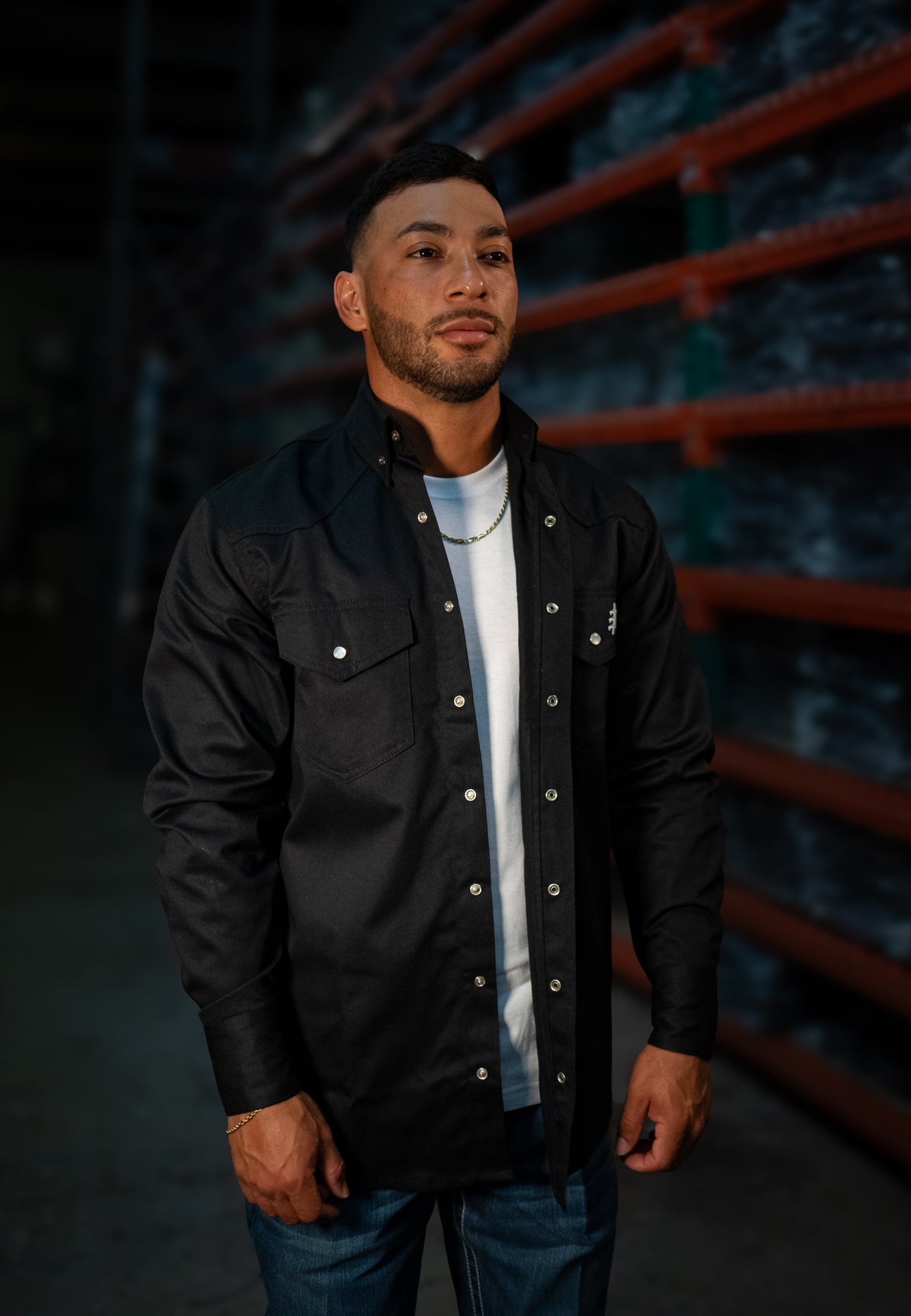
Black and khaki are two of the easiest work-shirt colors for men to build around, but they do different jobs in a wardrobe. A black work shirt looks sharper, creates stronger contrast with blue denim, and moves easily from the jobsite to an evening out. A khaki work shirt leans more traditional and utilitarian, works naturally with brown leather and medium-to-dark denim, and fits the warm earth-tone palette common in Western workwear.
If you are choosing between the two, start with the actual work requirement first. Color is a style and practicality decision; it does not determine whether a garment meets the flame-resistant or arc-rated requirements of your job. After the required protection, fabric, fit, and site rules are satisfied, the better color comes down to the kind of wear you expect, what jeans and boots you already own, and how much off-duty use you want from the shirt.
This guide compares black vs. khaki work shirts for men with a focus on Western workwear, FR pearl snaps, denim, boots, Texas conditions, fit, care, and everyday versatility.
Black vs. khaki work shirts at a glance
| Factor | Black work shirt | Khaki work shirt |
|---|---|---|
| Overall look | Sharper, darker, more modern | Classic, warm, workwear-forward |
| Best denim pairings | Medium wash, dark wash, faded blue | Dark wash, medium wash, stonewash |
| Boot pairings | Black, dark brown, or rich brown leather | Brown, tan, distressed brown, or black |
| Visible wear | Can show light dust and lint more clearly | Can show dark grease and oil more clearly |
| Off-duty use | Strong for dinner, date night, or a cleaner Western look | Strong for casual weekends, ranch-inspired looks, and daytime wear |
| FR protection | Depends on the specific garment rating, construction, labeling, and job requirements—not the color | |
Start with the work requirement, not the color
For ordinary casual workwear, color may be one of the first things you notice. For hazardous work, it should not be the first filter. If your employer or site requires flame-resistant or arc-rated clothing, begin with the required garment specifications and current label information. Veloura’s guide to what an FR pearl snap shirt is explains the difference between Western styling and protective workwear, while the flame-resistant Western work shirt guide goes deeper into how the two can overlap.
The two live Static FR shirts used in this comparison are especially useful because they put black and khaki into the same general product family. The current listings for both the FR Western Style Pearl Snap - Black and FR Western Style Pearl Snap - Khaki specify 7-ounce flame-resistant cotton, an 8.9 cal/cm² rating, CAT2/HRC2 labeling, and certifications listed as NFPA 2112, NFPA 70E, and ASTM F1506.
That makes color a useful secondary comparison here, but it is still important to verify the current garment label, employer requirements, and task-specific PPE rules before relying on any work shirt for hazard protection.
Why choose a black work shirt?
A black work shirt is the stronger first choice for a man who wants one piece to cover work and off-duty wear without looking overly utilitarian. Black creates a clean outline, looks intentional with blue denim, and can be dressed up simply by switching from a heavily worn work boot to a cleaner cowboy boot.
It also gives pearl snaps a slightly more modern edge. If you like the Western details but do not want the outfit to feel overly traditional, black is one of the easiest ways to tone down the visual theme while keeping the snap front, chest pockets, and workwear construction.

Black is especially easy to pair with medium-wash jeans because the contrast keeps the outfit from becoming one dark block. Dark-wash denim can work too, especially when the boots or belt introduce brown leather or texture. For a broader denim comparison, see stonewash vs. dark-wash jeans with cowboy boots.
The tradeoff is visible surface wear. Light-colored dust, lint, chalky residue, and some jobsite debris can stand out quickly on black. That does not make the shirt less practical; it simply means the shirt may look dirty in a different way than khaki.
Why choose a khaki work shirt?
Khaki is the more traditional workwear color. It sits naturally beside brown leather, blue denim, tan or distressed boots, and the muted colors common in Western wardrobes. If your closet already leans toward earth tones, a khaki work shirt often integrates with less effort than black.
Khaki also creates a useful contrast with dark indigo jeans. The lighter top and darker bottom make a simple work outfit look balanced without requiring a patterned shirt or extra layers. That makes it a strong choice for men who prefer solid, practical clothing and want their boots, belt, or denim to carry more of the visual weight.

On the appearance side, light-colored dust tends to blend into khaki more easily than it does on black, while dark grease, oil, and some stains can stand out more. The right choice therefore depends partly on what kind of visible mess your normal workday produces.
Which color works better with jeans?
Both colors are easy with denim, but the strongest combinations are slightly different.
Black work shirt + jeans
- Medium-wash blue jeans: probably the easiest all-around combination because the denim provides contrast.
- Dark-wash jeans: cleaner and more polished; add brown or textured leather so the outfit does not feel flat.
- Faded denim: creates a rugged contrast that works well with work boots and distressed cowboy boots.
Khaki work shirt + jeans
- Dark-wash jeans: one of the strongest combinations because the color separation is immediate.
- Medium wash: relaxed and traditional, especially with brown boots.
- Stonewash: casual and workwear-heavy, useful when you want the outfit to look lived-in rather than polished.
You can browse Veloura’s men’s jeans collection for current denim options. If the jeans also need to work over cowboy boots, the guide to how men’s jeans should fit over cowboy boots is the better next step than choosing wash color alone.
Black vs. khaki with cowboy boots
Neither shirt color forces you into one boot color. The better approach is to think about the full outfit.
A black work shirt with black boots creates a streamlined, monochromatic direction. Pair the same shirt with dark brown boots and blue denim, and the outfit becomes warmer and more recognizably Western. A khaki work shirt naturally supports brown, tan, and distressed leather, but black boots can give it sharper contrast.
If you are deciding on the boots at the same time, today’s brown vs. black cowboy boots guide covers that purchase decision in detail. Veloura’s live boots collection gives you another crawl path from work shirt to footwear rather than treating each category as a separate wardrobe decision.
Which is better for hot Texas weather?
For hot-weather workwear, do not let shirt color distract from the factors that usually matter more in practice: the garment’s fabric, weight, cut, ventilation, required protection, and how it fits under or around the rest of your PPE. A shirt that is too tight through the shoulders or chest can become uncomfortable quickly during a long shift regardless of whether it is black or khaki.
For Western shirts that are not being selected for a specific hazard requirement, Veloura’s guide to the best pearl snap shirts for hot weather explains what to prioritize when heat is the main concern. For broader wardrobe ideas, Modern Texas Men’s Style: From Workday to Weekend connects workwear pieces to a practical Texas wardrobe.
Which color is more versatile after work?
If you want the same shirt to work after the shift, black has a slight advantage for evening use. With clean dark jeans, a good belt, and cowboy boots, a black Western work shirt can move into dinner or a casual night out without looking like you forgot to change.
Khaki is more relaxed. It looks especially natural for weekend errands, outdoor settings, casual lunches, and everyday Western outfits. It can still be dressed up, but its strength is that it keeps the workwear identity visible rather than trying to disguise it.
If your goal is a cleaner Western outfit rather than jobsite utility, the comparison between solid and patterned Western shirts can help you decide whether a simple black or khaki solid belongs in the wardrobe before you add prints.
Should you buy black or khaki first?
Choose black first if most of your jeans are medium blue, you wear black or dark boots often, you want a work shirt that can look sharper after hours, or your wardrobe already contains a lot of earth tones and needs contrast.
Choose khaki first if your boots and belts are mostly brown, you wear dark-wash denim often, you prefer classic Western workwear, or you want a lighter neutral that mixes easily with blue denim.
If work shirts are a major part of your weekly wardrobe, owning both is not redundant. Black and khaki create two different outfit bases while allowing you to reuse the same jeans, boots, belt, and outer layers. That is exactly the logic behind a small men’s workwear capsule wardrobe: fewer pieces, but more combinations.
Fit matters more than either color
A great color cannot rescue a poor fit. A work shirt should allow comfortable movement through the shoulders, back, and arms, while still sitting cleanly enough that extra fabric does not bunch excessively. If you tuck it, check that the body is long enough to stay secure through bending and reaching. If you layer underneath, leave enough room for that layer without turning the shirt into an oversized shell.
Pearl-snap buyers can use Veloura’s pearl snap fit guide for the styling side of the equation and the Veloura Size Guide before ordering. For protective workwear, fit also needs to remain compatible with your employer’s PPE program and the garment manufacturer’s instructions.
Care: keep the shirt working as intended
Ordinary Western shirts and FR work shirts should not automatically be treated the same in the laundry. If the garment is flame-resistant, follow the manufacturer’s care label and any workplace laundering requirements rather than improvising based on color. Veloura’s guide to washing FR clothing covers the basics and explains why maintaining the garment properly matters.
For color appearance, wash practices that reduce unnecessary abrasion and residue can help both black and khaki look better over time. But when protective performance is involved, appearance is secondary to following the correct care instructions.
Where these shirts fit in Veloura’s workwear cluster
This comparison is one part of a larger path through the store. Start with the Men’s Work Shirts collection if you are shopping the category, move into Work Shirt vs. Western Shirt if you are deciding what kind of shirt you actually need, then use the FR guides if your job requires protective apparel. From there, the Western Gear collection, Jeans, and Boots make it possible to build the rest of the outfit without starting a new search from scratch.
Final verdict: black or khaki?
For most men, black is the better first buy when versatility and after-work styling matter most. It works with nearly every blue-jean wash and can look noticeably sharper with minimal effort.
Khaki is the better first buy for a classic Western workwear wardrobe, especially if you already wear brown boots, brown belts, and dark or medium-wash denim. It has a warmer, more traditional character and integrates naturally with earth tones.
For actual FR or arc-rated work, however, the deciding factor is never simply black versus khaki. Confirm the required protection, garment rating, current labeling, fit, and employer rules first. Then choose the color that makes the rest of your wardrobe easier to use.
Frequently asked questions
Does work shirt color affect the FR rating?
No. Color by itself does not establish a garment’s flame-resistant or arc-rating performance. Check the specific garment’s current label, rating, certifications, and your employer’s requirements.
Is black or khaki easier to keep looking clean?
It depends on the kind of dirt. Black often makes light dust and lint more visible, while khaki can make dark grease and oil marks easier to see. Neither color is universally better at hiding jobsite wear.
Can you wear a khaki work shirt with blue jeans?
Yes. Khaki with blue denim is one of the easiest Western workwear combinations. Dark-wash jeans create stronger contrast; medium and stonewashed denim produce a more relaxed look.
Can you wear a black work shirt with brown cowboy boots?
Yes. Black and brown can work especially well when blue denim separates the two. A brown belt can echo the boots and make the combination feel intentional.
Should a work shirt be tucked in?
Follow jobsite or uniform requirements first. Off duty, a shirt designed with enough length and a clean hem can be tucked for a sharper look; casual Western shirts may also work untucked when the proportions are right.