How Should an FR Work Shirt Fit? Men’s Sizing Guide
September 23, 2026 · Isaac Bounds
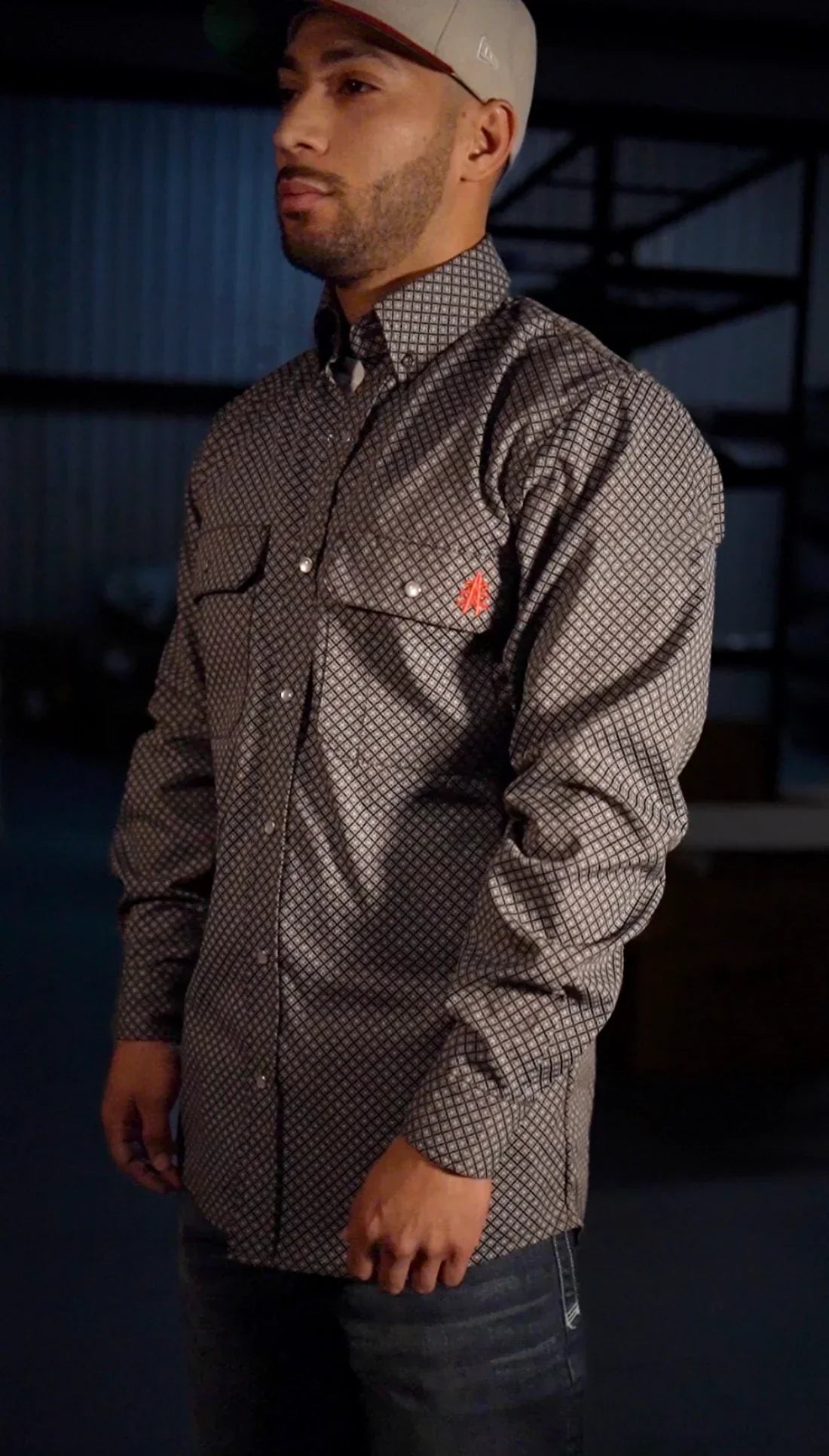
When a flame-resistant work shirt fits correctly, it should feel like workwear you can actually move in—not a dress shirt stretched across the shoulders and not an oversized layer that hangs everywhere. For men shopping online, the harder question is knowing where an FR shirt should sit through the shoulders, chest, sleeves, and hem before choosing a regular or tall size.
This guide focuses on FR work shirt fit and sizing: how to judge mobility, coverage, sleeve length, torso length, layering room, and when tall sizing may solve the problem better than simply sizing up. If you are new to this category, start with Veloura's guide to what an FR pearl snap shirt is, then use this article as the practical fit checklist before buying.
Workwear note: Fit is only one part of selecting protective clothing. Always verify the garment's labeling, manufacturer instructions, your employer's PPE requirements, and the hazards of your specific job. A shirt that fits well is not automatically appropriate for every workplace or exposure.
Quick Answer: How Should an FR Work Shirt Fit?
An FR work shirt should generally give you enough room to reach, bend, drive, climb, and work without constant pulling, while still fitting closely enough that the shoulders, cuffs, and torso stay where they are supposed to. The best fit is functional rather than intentionally tight or intentionally baggy.
- Shoulders: the shoulder seams should sit close to the edge of your shoulders without digging in or hanging far down the upper arm.
- Chest and upper back: you should be able to reach forward and across your body without the placket straining or the back feeling locked.
- Sleeves: the cuffs should reach the wrist area and remain useful when your arms move forward or upward.
- Torso and hem: the shirt should provide enough length for the way you wear it at work, including bending and reaching.
- Collar: it should be comfortable when worn as required for your job rather than forcing you to leave it open because the neck is too tight.
- Regular vs. tall: if the chest and shoulders fit but the sleeves or body are consistently too short, a tall size can make more sense than moving to a wider size.
That is the short version. The sections below show how to evaluate each area separately so one measurement does not force you into the wrong overall size.
FR Work Shirt Fit vs. Regular Pearl Snap Fit
A regular pearl snap can be chosen mostly around silhouette, comfort, and the look you want. An FR pearl snap may still have Western styling, but it belongs in a workwear decision where intended coverage, movement, garment instructions, and workplace requirements come first.
If you want the broader style-based breakdown, read How Should a Pearl Snap Shirt Fit?. The difference in this guide is the emphasis on work movement, sleeve and hem coverage, layering, and regular-versus-tall sizing. Veloura's Work Shirt vs. Western Shirt guide also explains why two shirts that look similar can be built for very different jobs.
1. Start With the Shoulders
The shoulders are one of the fastest places to spot a poor shirt size because they affect almost everything below them. If the shirt is too small through the shoulders, reaching forward can pull the entire front of the shirt toward your arms. If it is much too large, the shoulder seams may fall down the upper arms and leave extra fabric around the chest and sleeves.
Stand naturally and look at where the shoulder seam lands. It should be near the point where your shoulder begins to curve into your upper arm. Then move. Reach straight in front of you, cross one arm over your chest, and raise both hands as if you were grabbing something above shoulder height. You want usable mobility without feeling as though the shirt is fighting the motion.
Do not judge fit only while standing still in front of a mirror. A work shirt can look clean in a neutral pose and still become restrictive the first time you reach into a truck, operate equipment, carry a box, or bend over a workbench.
2. Check the Chest and Upper Back for Working Room
The chest should have enough ease that the front snaps are not under constant tension. Look for obvious signs such as pulling lines radiating from the placket, gaps between snaps, or a chest that feels compressed when you take a full breath. Then check the opposite problem: so much extra fabric that the shirt feels disconnected from your body even before you add layers.
The upper back matters just as much. Reach both hands forward as though you were holding a steering wheel or pushing a loaded cart. If that motion instantly pulls the cuffs far up your arms or yanks the front of the shirt backward, the shirt may be too tight through the back or shoulders.
For most men, the goal is not "slim" versus "relaxed" as a fashion label. The better question is whether the shirt lets you complete your normal work motions while maintaining the coverage and wearing configuration your job requires.
3. Get Sleeve Length Right Before You Blame the Whole Size
Sleeve length is where many online shoppers accidentally buy too large. If a medium fits the chest but its sleeves are short, jumping to a large may add width everywhere when what you really needed was more length.
With your arms relaxed, the cuff should sit around the wrist rather than ending noticeably high on the forearm. Next, extend your arms forward and bend your elbows. Some sleeve movement is normal, but the cuffs should not become so short that the shirt clearly stops functioning the way you need it to.
This is where tall sizing becomes valuable. Several live Static FR shirts at Veloura, including the Copperhead FR Pearl Snap Work Shirt and Shadow Black FR Pearl Snap Shirt, currently include tall variants alongside regular sizes. That gives shoppers a way to add body and sleeve length without automatically adding the extra width of the next standard size.

4. Check Torso and Hem Length While Moving
Torso length can be easy to miss because a shirt may look long enough until you bend, reach, or sit. Test the shirt in the posture you actually work in. Bend at the waist, reach above your head, sit down, and stretch forward. Pay attention to how far the hem travels and whether you are constantly pulling the shirt back into position.
If the width is right but the shirt keeps feeling short through the body, a tall size may again be the better first move. If both the body and chest feel restrictive, moving up a full size may be more appropriate. Use Veloura's Size Guide as a starting point, but also compare the product's available sizes with a work shirt you already know fits well.
Regular vs. Tall FR Work Shirts: Which Should You Buy?
Tall sizing is not simply "the bigger version." Its purpose is generally to serve men who need additional length while staying closer to the intended chest and shoulder fit of the base size. Exact grading varies by product and manufacturer, so always confirm the current size information for the shirt you are considering.
| Fit problem | Better first move to consider | Why |
|---|---|---|
| Chest and shoulders feel tight | Compare the next standard size | You likely need more overall room, not only length. |
| Chest fits but sleeves are short | Check a tall variant | Extra length may solve the issue without adding unnecessary width. |
| Chest fits but hem rides up too easily | Check a tall variant | Additional body length may improve coverage during movement. |
| Shoulder seams hang well down the arm | Compare a smaller or better-proportioned size | Extra width may be creating a sloppy fit. |
| You routinely wear layers underneath | Size for the actual layer combination | A shirt that only fits over a T-shirt may not fit the same over required work layers. |
One useful rule: do not size up purely because "work shirts should be loose." Buy the size that gives you the movement and coverage you need. Excess fabric is not a substitute for correct proportions.
Two Live Veloura FR Shirts to Use as Fit References
Copperhead FR Pearl Snap Work Shirt
The Copperhead FR Pearl Snap Work Shirt is a useful example for shoppers comparing regular and tall sizing because the live listing currently includes both types of variants. If your normal size works through the chest but feels short through the sleeves or torso, check the tall option before automatically moving up in width.
Shadow Black FR Pearl Snap Shirt
The Shadow Black FR Pearl Snap Shirt also has regular and tall choices in the current catalog, making it another practical fit reference. Black is easy to integrate into a workwear rotation, but sizing should come before color. Once the fit is settled, Veloura's Black vs. Khaki Work Shirts for Men guide can help with the color decision.

How to Size an FR Work Shirt Online
Buying workwear online gets easier when you stop trying to guess from the letter on the tag. A medium in one shirt does not guarantee the same proportions in every product. Use a repeatable process instead.
- Start with the current size information. Open the Veloura Size Guide and the live product page before choosing.
- Compare with a shirt you already wear. Think about what fits correctly through the shoulder, chest, sleeve, and body rather than relying only on your usual T-shirt size.
- Account for real work layers. If you normally wear another approved layer underneath, evaluate the shirt with that actual combination in mind.
- Separate width problems from length problems. If width is good but sleeves and hem are short, investigate tall sizing before going wider.
- Use movement, not only appearance. Reach forward, overhead, across your body, sit, and bend.
- Verify protection separately. Confirm that the garment's labeling and intended protection meet the requirements set for your work. Fit alone does not establish suitability for a hazard.
You can compare current options in Veloura's Men's Work Shirts collection, where FR pearl snaps sit inside a broader workwear category rather than being isolated from the rest of the wardrobe.
Five Common FR Work Shirt Fit Mistakes
1. Buying Only by Your T-Shirt Size
A T-shirt gives you very little information about woven-shirt sleeve length, shoulder placement, torso length, or room across the upper back. Treat your usual size as a starting point, not a guarantee.
2. Going Oversized Just to Create Mobility
If you need dramatically more fabric to move comfortably, the proportions may be wrong. Check the shoulder and back fit first. Correct mobility should come from a size and cut that work with your body, not simply from buying the largest shirt you can tolerate.
3. Sizing Up When You Actually Need Tall
This is one of the most important buying distinctions. A wider size can leave the chest and shoulders loose while still failing to solve the proportions cleanly. If length is the only problem, compare tall variants.
4. Testing the Shirt Only While Standing Still
Work happens in motion. Sit, reach, bend, and raise your arms. A shirt that looks right for a photograph may feel completely different after ten minutes of movement.
5. Treating "FR" as a Universal Safety Shortcut
FR is not a reason to skip the rest of the selection process. Workplace hazards and protective-clothing requirements differ. Use the garment label, manufacturer information, and employer or site requirements to determine whether a specific item is appropriate. OSHA standards in covered electrical work also place emphasis on job-specific training, hazard controls, and appropriate protective equipment—not simply the presence of a particular clothing label.
How an FR Shirt Fits Into a Complete Western Workwear Outfit
Once the shirt fits correctly, the rest of the outfit becomes easier to build. For a practical Western workwear base, pair it with work-appropriate denim and footwear selected for your job rather than forcing every item to be purely fashion-driven.
If your job calls for protective denim, Veloura's FR Jeans vs. Regular Denim guide explains the difference before you shop the broader Men's Jeans collection. For a smaller, repeatable closet, the Men's Workwear Capsule Wardrobe shows how shirts, jeans, and outer layers can work together without buying a different outfit for every day.
Men who want that workwear base to still feel distinctly Western can use the Modern Texas Men's Style guide for the broader aesthetic, then browse Western Gear for accessories and complementary pieces.
Care Matters After You Find the Right Fit
A good fit only stays useful if the garment is cared for as intended. Do not use aggressive washing or drying as a strategy to force an FR shirt into a smaller size. Follow the care label and manufacturer instructions, especially with protective workwear.
For the next step, read How to Wash FR Clothing. That guide covers the care side of the cluster so this article can stay focused on choosing the right size and proportions before purchase.
FR Work Shirt Fit FAQ
Should FR work shirts fit loose?
Not automatically. They should provide enough room for the movements and layers required by your job without being so tight that movement is restricted. Intentionally oversized is not the same thing as correctly fitted.
Can an FR work shirt be too tight?
Yes. If the snaps pull, the upper back restricts reach, the collar cannot be worn as intended, or normal movement causes major pulling through the sleeves and torso, compare a different size or proportion.
Should I size up in an FR shirt?
Only if you need more overall room. If the chest and shoulders already fit but the sleeves or torso are short, compare a tall size first when the product offers one.
How long should FR work shirt sleeves be?
The cuff should generally reach the wrist area and remain functional during normal arm movement. Exact workplace wearing requirements and garment instructions should take priority over style rules.
Is a tall FR shirt the same as a bigger size?
No. Tall sizing is intended to address length more directly, while moving from a medium to a large, for example, normally changes overall proportions as well. Exact measurements vary by product, so confirm the current size information.
Can an FR shirt be worn untucked?
That depends on the garment's intended use and the requirements of your employer or worksite. Do not let a style preference override the required wearing configuration for protective clothing.
Does shirt size change an FR rating?
The garment's protective labeling and rating are separate from whether you choose a small, large, or tall size. But the size still needs to let you wear the garment as intended, so protection details and fit should both be checked before purchase.
Final FR Work Shirt Fit Checklist
- The shoulder seams sit near the edge of your shoulders.
- The chest does not gap or pull under normal movement.
- You can reach forward and overhead without the shirt locking across your back.
- The cuffs stay around the wrist area through typical work motions.
- The torso is long enough for bending, sitting, and reaching.
- You have appropriate room for the layers you actually wear.
- You considered tall sizing if width is right but length is wrong.
- You separately verified the garment's labeling and your workplace requirements.
The best FR work shirt size is the one that solves your actual fit problem instead of creating a new one. Start with the Men's Work Shirts collection, compare regular and tall variants on live products such as the Copperhead FR Pearl Snap Work Shirt, and use the Size Guide before ordering. Once fit is dialed in, the rest of your Western workwear rotation can be built around it.